19 Smart Living Dining Combo Ideas for a Stylish, Comfortable Home
Introduction
If your living room and dining area share the same space, you’re not alone. Many modern homes and apartments have open layouts where one room needs to do double duty. That’s exactly where these 19 living dining combo ideas come in handy.
You don’t need a huge budget or a full remodel. With smart furniture choices, colors, and layouts, you can make one room feel like two: a cozy living area and a welcoming dining space that work together beautifully.
Why a Living Dining Combo Can Actually Be an Advantage?
Before jumping into the 19 ideas, it helps to see your living dining combo as a benefit, not a problem.
- It makes your home feel more open and social.
- You can talk with family or guests while cooking, eating, or relaxing.
- It’s easier to bring in natural light across the whole space.
- You save square footage and avoid building extra walls.
The key is to define each zone clearly while keeping the whole room looking connected and stylish.
1. Use Area Rugs to Define Each Zone
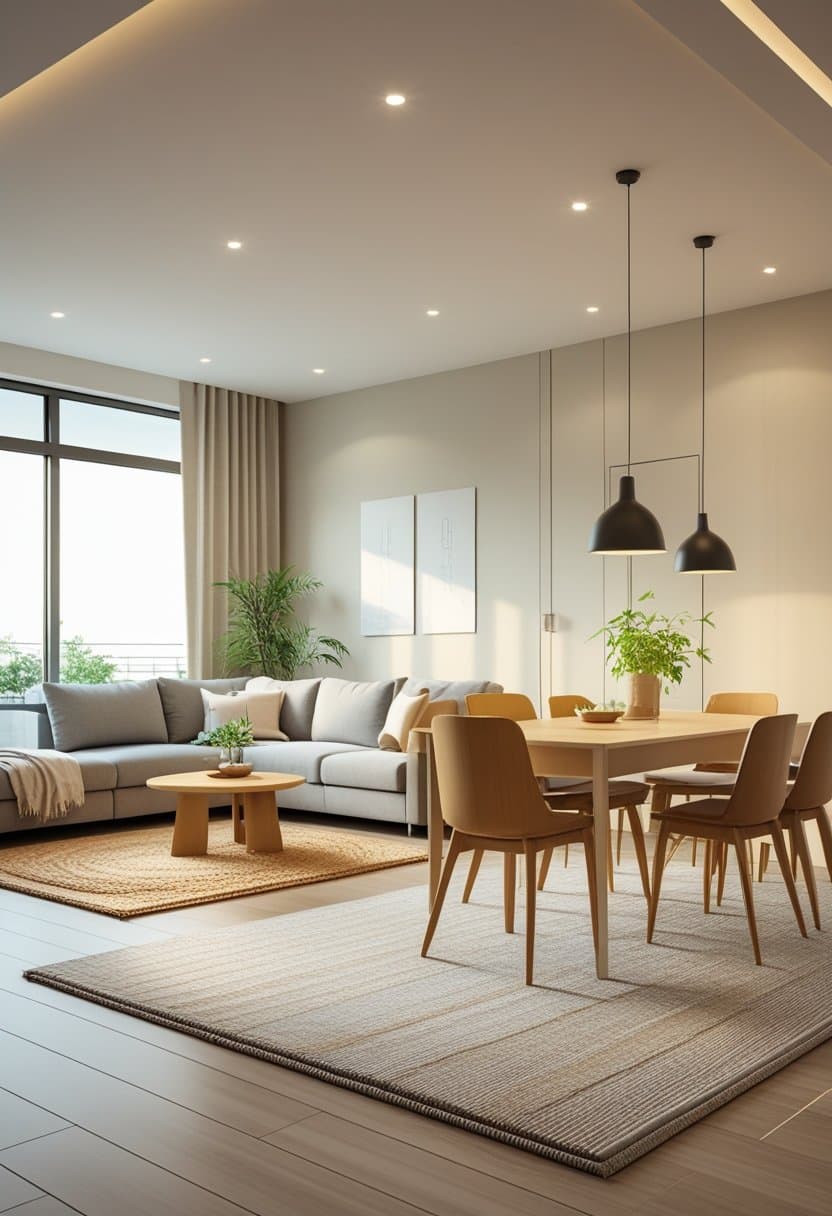
One of the simplest living dining combo ideas is to use rugs to divide the space visually.
- Place a large rug under the sofa and coffee table.
- Use a different rug under the dining table.
- Choose colors and patterns that complement each other.
Why it works:
- Rugs act like “invisible walls” without blocking light or views.
- They help each area feel intentional and grounded.
- They also reduce noise and make the room feel cozy.
Tip: In a small living dining combo, keep rug patterns simple so the room doesn’t feel too busy.
2. Create a Cohesive Color Palette
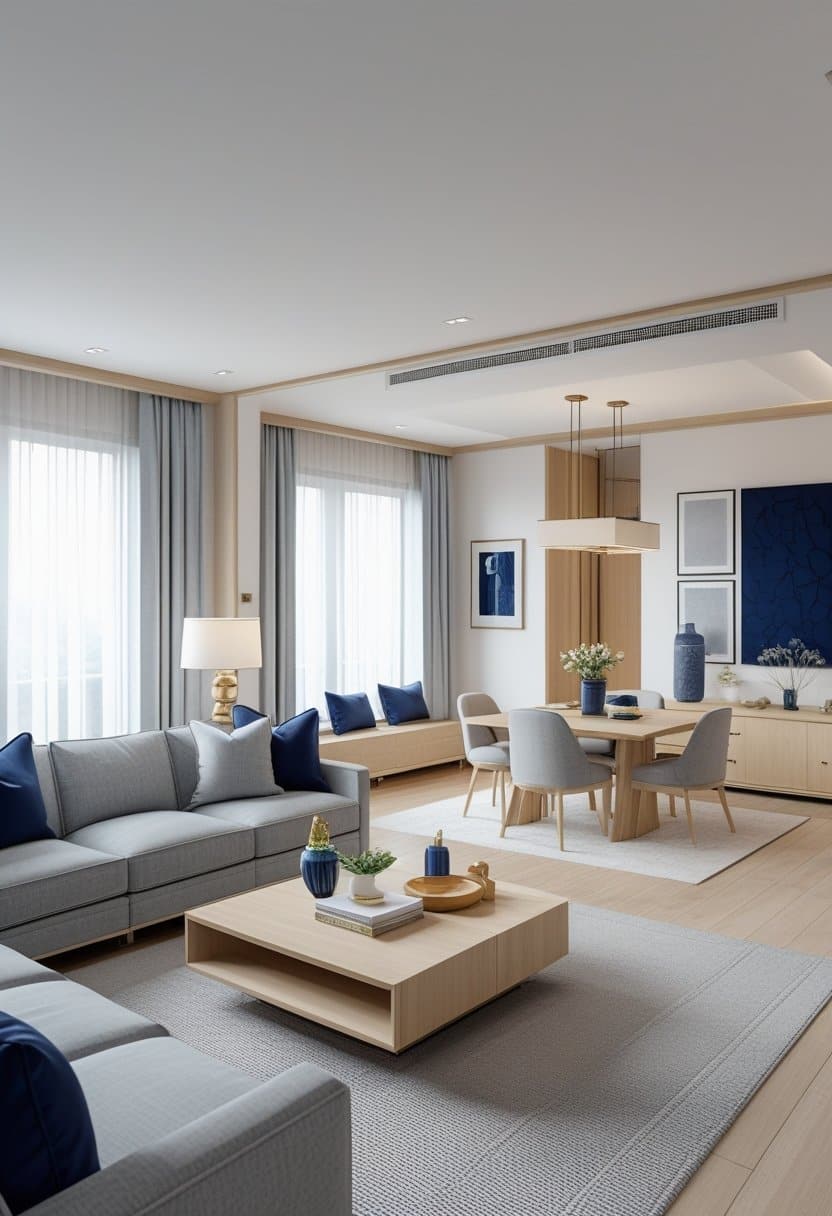
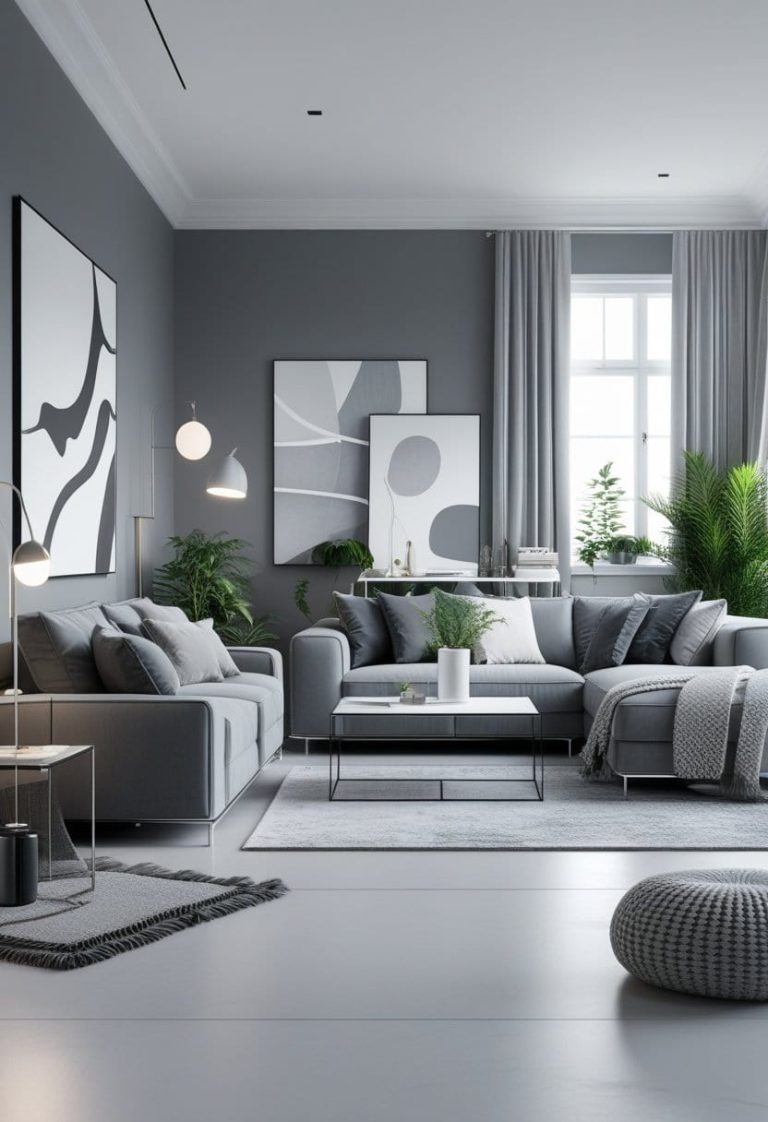
When one room has two functions, color is your best friend. A consistent palette makes everything feel connected, even if the furniture styles differ.
You can:
- Choose 2–3 main colors and repeat them in both the living and dining zones.
- Use a neutral base (white, beige, gray) and add color through cushions, art, and chairs.
- Repeat one accent color in both spaces for harmony.
Example combination:
- Main color: Soft gray
- Accent: Navy blue
- Warm detail: Light wood furniture and tan textiles
This simple trick makes your 19 living dining combo ideas feel like one thoughtful design, not random pieces thrown together.
3. Place the Sofa as a Room Divider
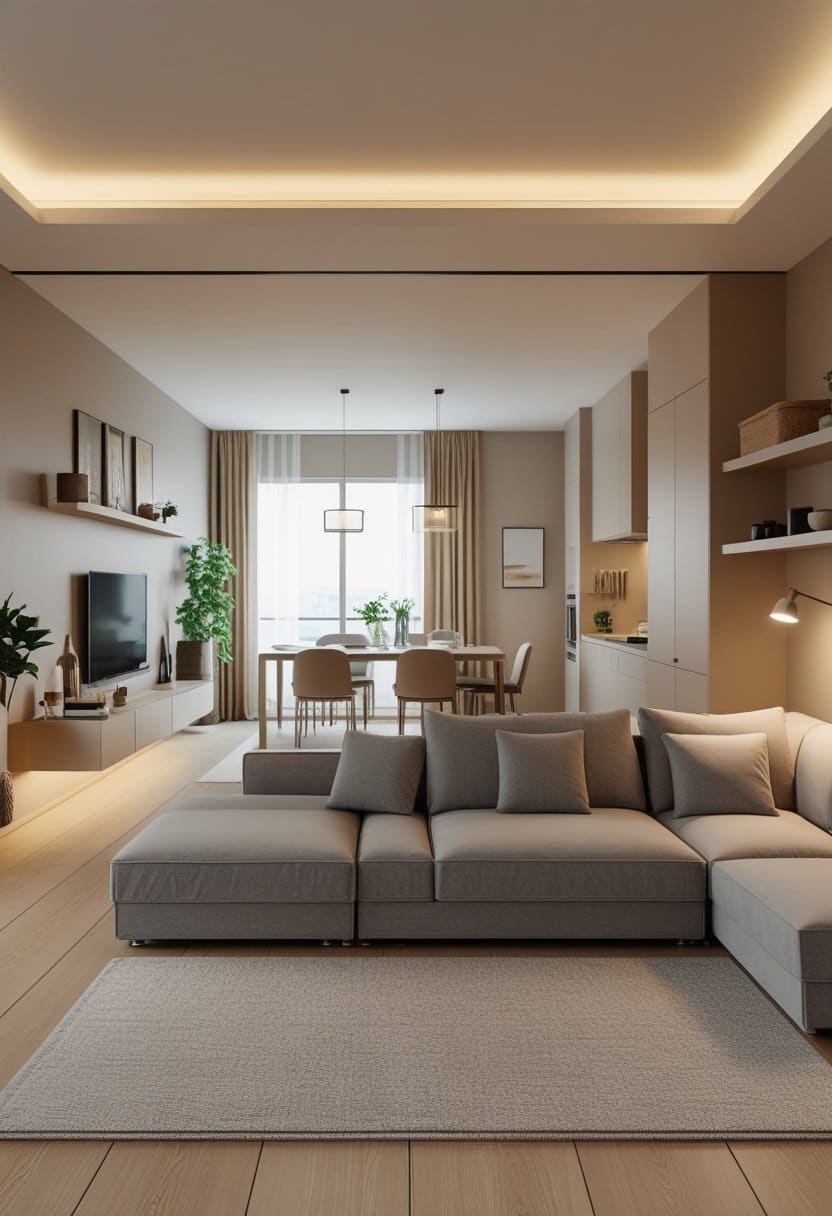
Your sofa can do more than provide seating. It can visually divide the living and dining areas.
- Position the sofa with its back facing the dining area.
- Add a console table behind the sofa for extra storage and decor.
- Keep a clear walkway around it so the room flows smoothly.
Benefits:
- You mark where the living zone ends and the dining zone begins.
- You still keep the sight lines open (no walls needed).
- It feels natural and cozy, especially in open-plan rooms.
4. Use a Bench or Banquette Against the Sofa Back
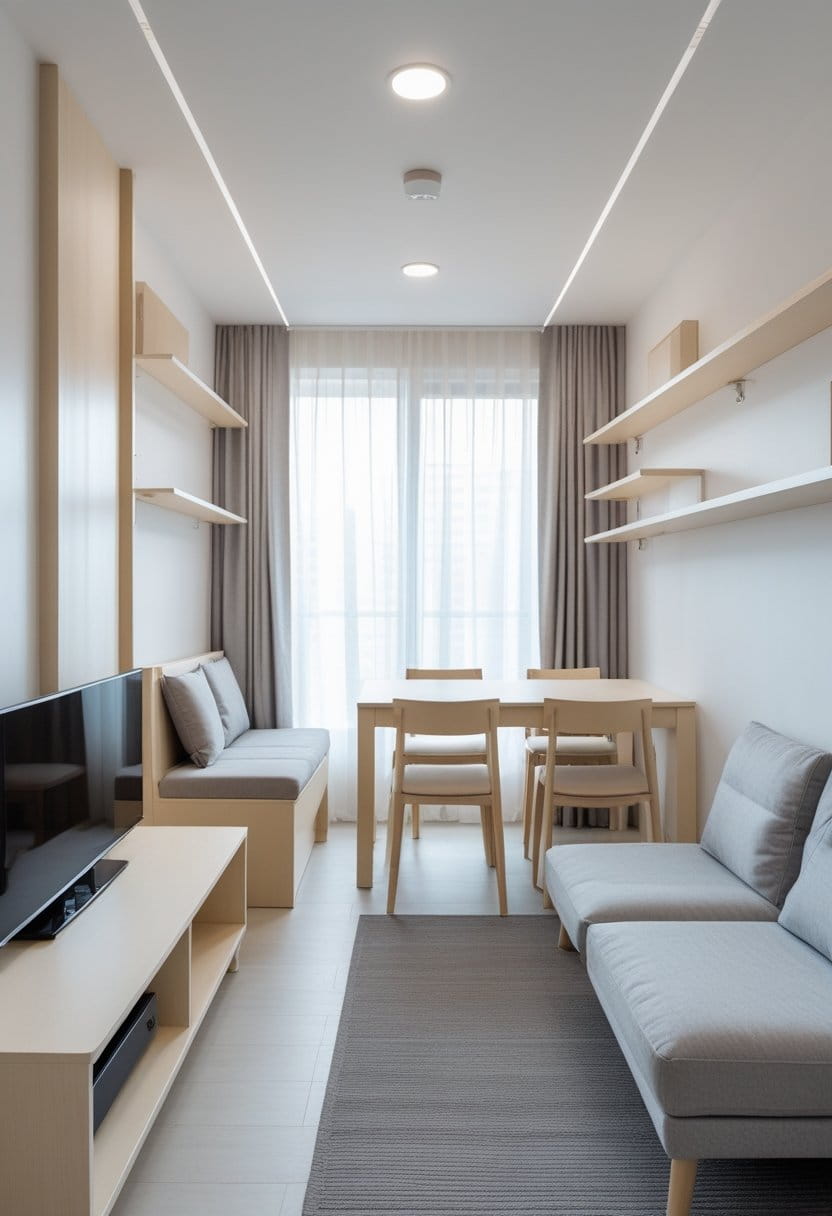
For very small spaces, consider combining seating. This is one of the most space-saving living and dining room combo ideas.
- Place a low bench or built-in banquette directly behind the sofa.
- Let it serve as seating for one side of the dining table.
- Add cushions to make it comfortable.
Why it’s clever:
- You get a lot of seating without needing extra chairs.
- The sofa and dining area become one compact unit.
- It’s ideal for narrow rooms or studio apartments.
5. Choose a Round Dining Table to Save Space
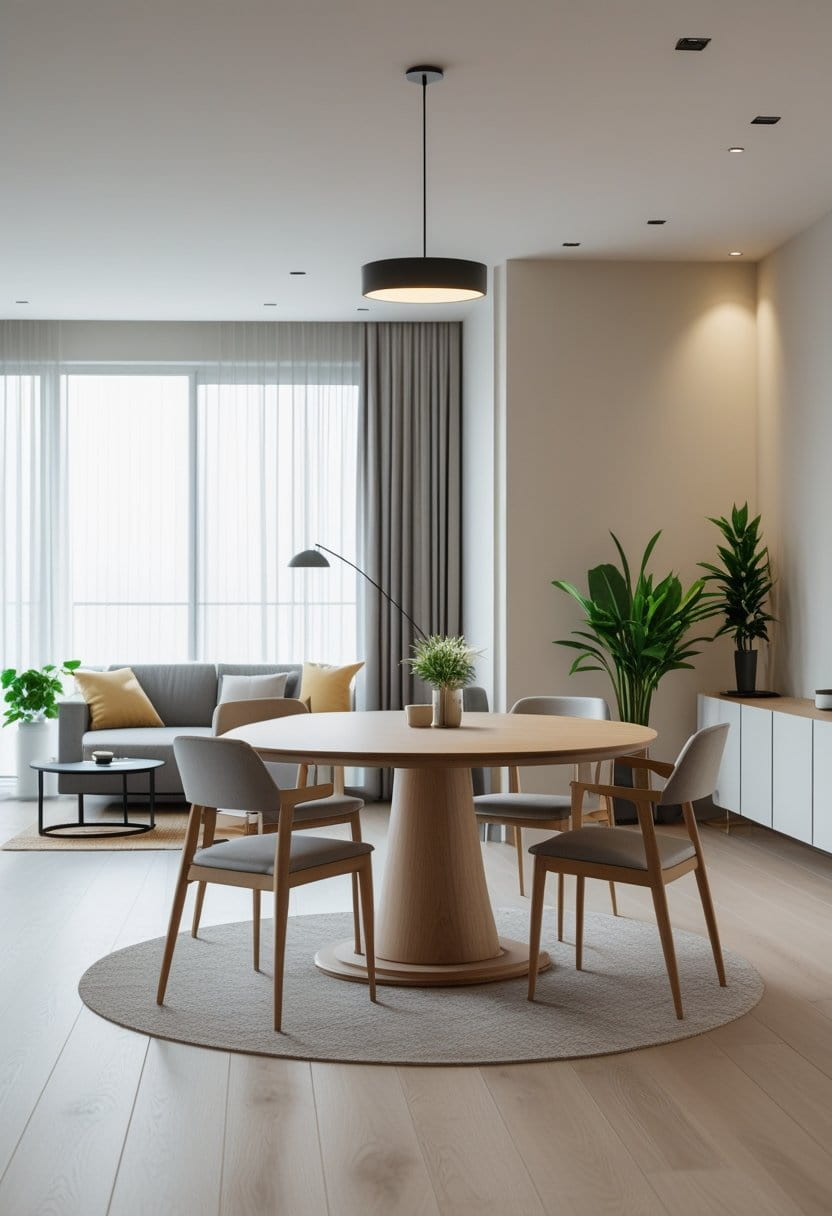
Round tables are a secret weapon in small living dining combo layouts.
- They take up less visual space and have no sharp corners.
- They allow you to add or remove chairs easily.
- They make movement around the table smoother.
Where it works best:
- Square or small rectangular rooms.
- Corners near windows where light can make the space feel larger.
Tip: A pedestal base (one center leg) gives more legroom and feels less bulky.
6. Go for a Built-In Banquette Along One Wall
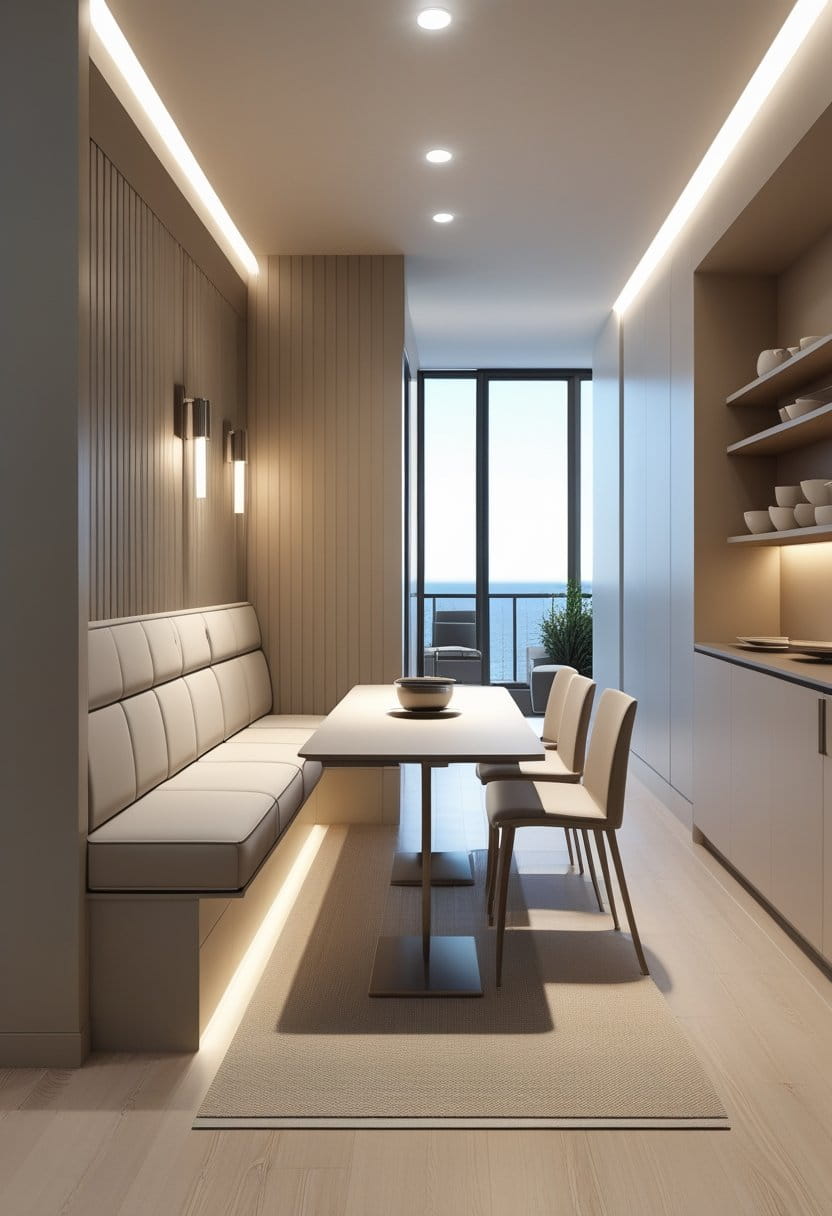
If your living dining combo is long and narrow, a built-in banquette against the wall can transform it.
- Run a bench with hidden storage along one wall.
- Pair it with a slim dining table and a couple of chairs opposite.
- Add cushions and a few throw pillows for comfort.
Advantages:
- Saves floor space and makes the room feel more open.
- Provides extra storage for table linens, board games, or seasonal items.
- Looks custom and polished.
7. Let a Kitchen Island or Bar Define the Dining Area
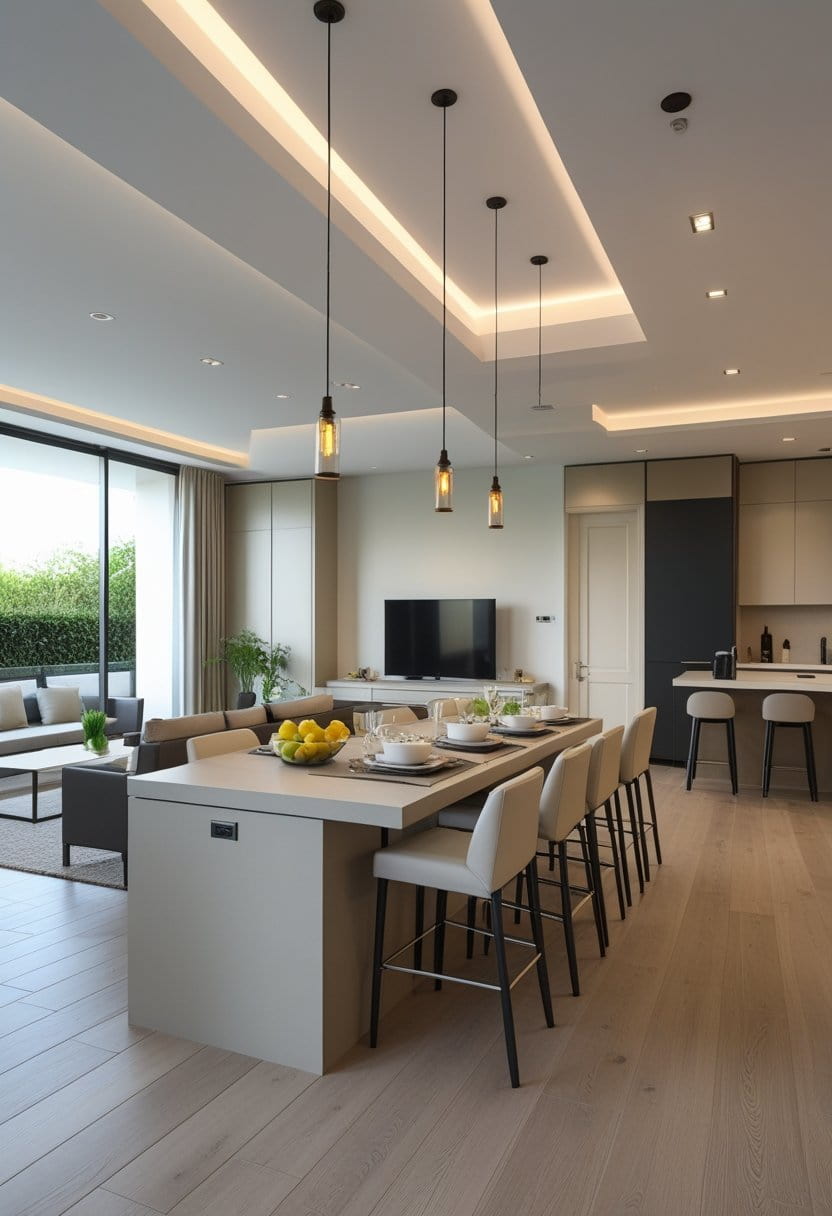
In some open layouts, the kitchen flows right into the living area. In that case, use a kitchen island or bar counter to create a dining space.
- Place bar stools on the living room side of the island.
- Use the island as both meal prep area and dining spot.
- Hang pendant lights above for a cozy feel.
Why it works well:
- You combine kitchen, dining, and living into one connected zone.
- Great for casual meals and quick breakfasts.
- Frees up space where a separate dining table might feel cramped.
8. Float Furniture Away from the Walls
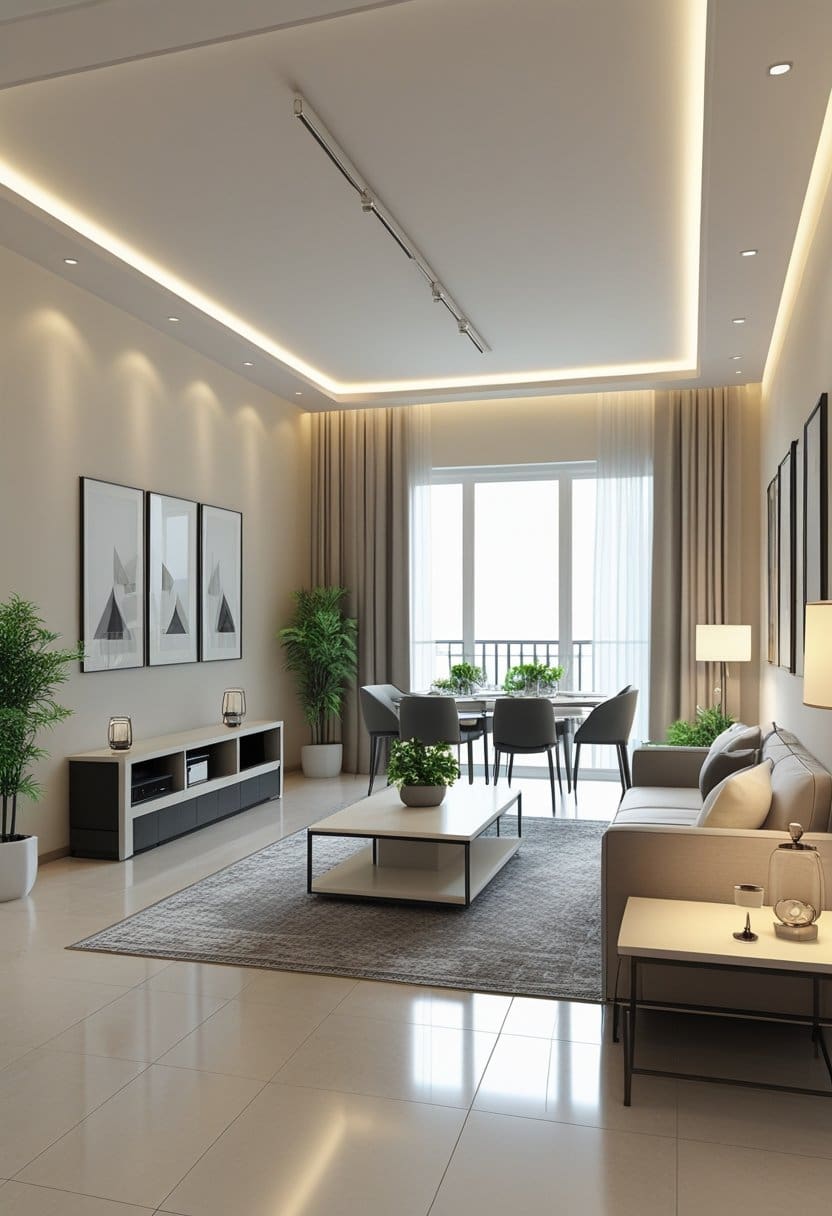
Pushing all furniture against the walls can make a combo room feel like a hallway. Instead, “float” key pieces.
- Pull the sofa away from the wall to create a more intimate living zone.
- Place the dining table closer to a window or centered in the open side of the room.
- Use side tables and rugs to anchor each zone.
Benefits:
- The space feels more balanced and intentional.
- You avoid the “furniture around the edges” look.
- Traffic paths become clearer and more comfortable.
9. Use Matching Flooring Throughout
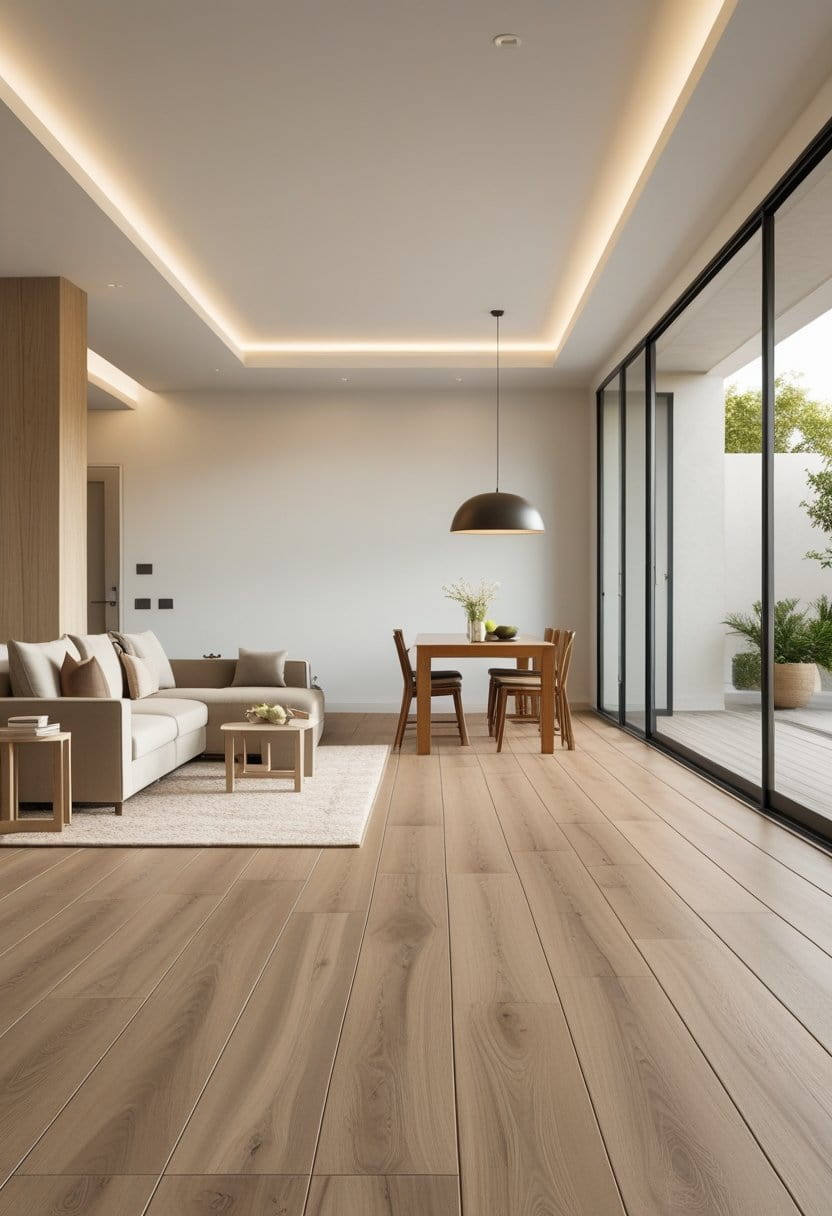
Using the same flooring in both the living and dining sections helps everything feel larger and more unified.
Popular options:
- Wood or wood-look laminate
- Luxury vinyl planks
- Large format tiles
Why it matters:
- Different floors can chop up the room visually.
- One continuous floor makes the combo space feel wider and more open.
You can still define each zone with rugs, furniture groupings, and lighting.
10. Create Zones with Lighting
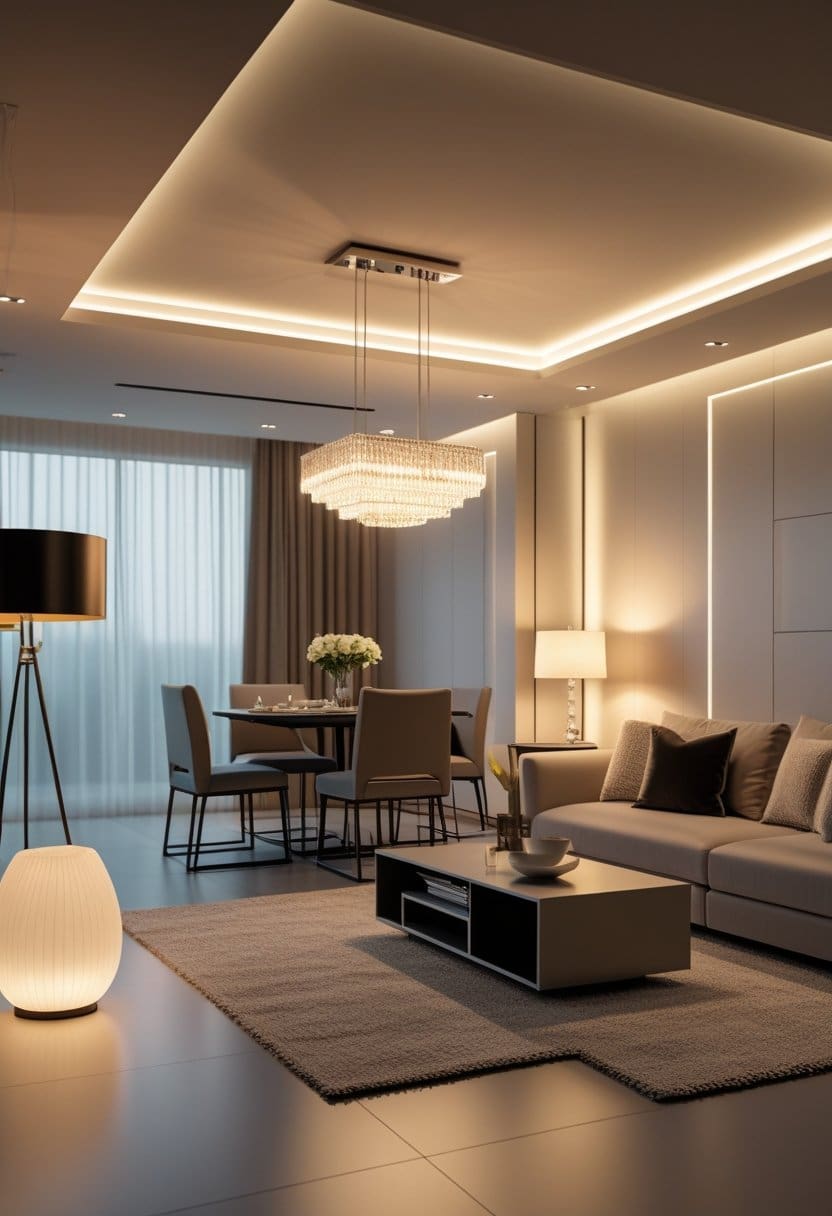
Lighting is one of the most powerful living dining combo ideas that many people overlook.
Try this:
- A statement chandelier or pendant directly above the dining table.
- A floor lamp and table lamps around the sofa.
- Dimmer switches so you can set the mood.
Result:
- Each zone has its own atmosphere.
- You can brighten the dining area for meals and soften the light for movie nights.
- The room feels layered and comfortable.
11. Choose Slim, Multi-Functional Furniture
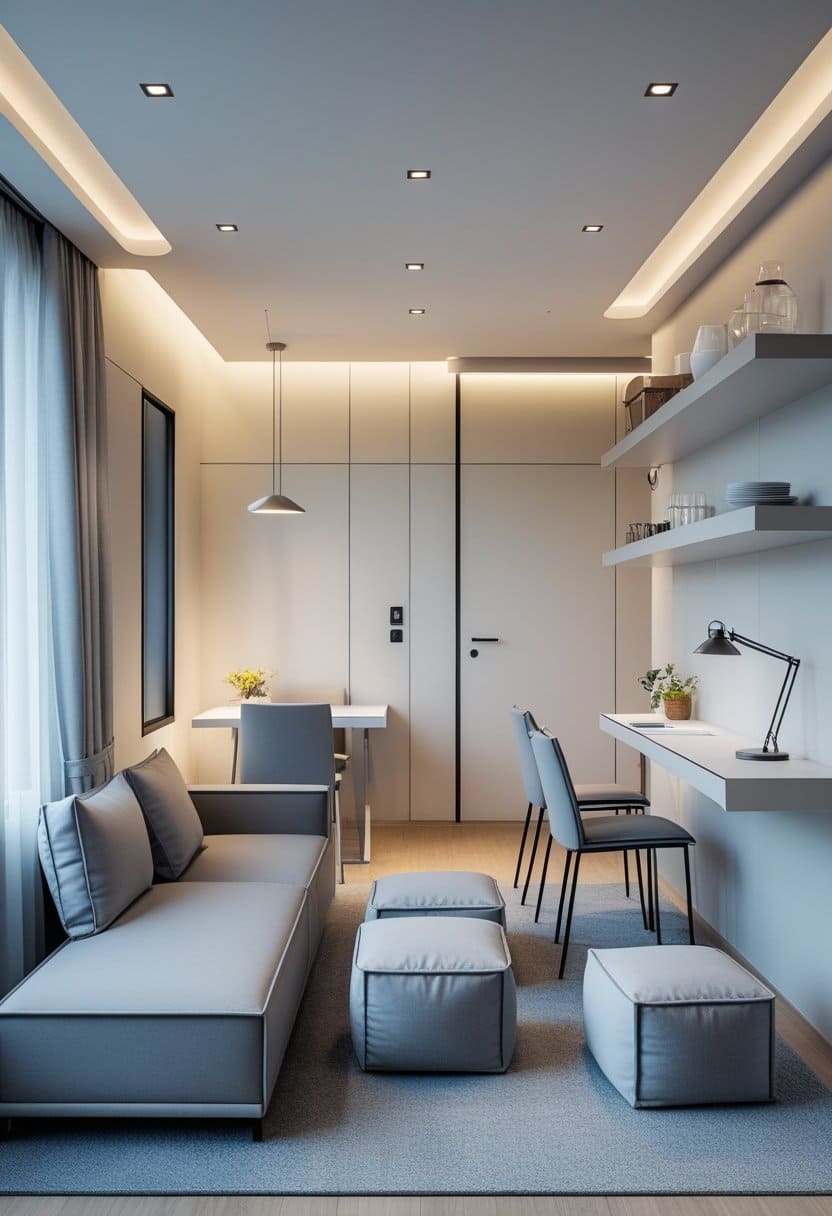
In a living dining combination, bulky furniture can quickly overwhelm the room. Look for pieces that are slim, light, and do more than one job.
Examples:
- A slim console table that also works as a desk or bar.
- Ottomans with storage that double as extra seats.
- A coffee table that can lift up and act as a laptop table or small dining surface.
Benefits:
- You get more function from fewer pieces.
- The space feels open, not crowded.
- It’s ideal for small apartments and compact homes.
12. Use an Extendable Dining Table
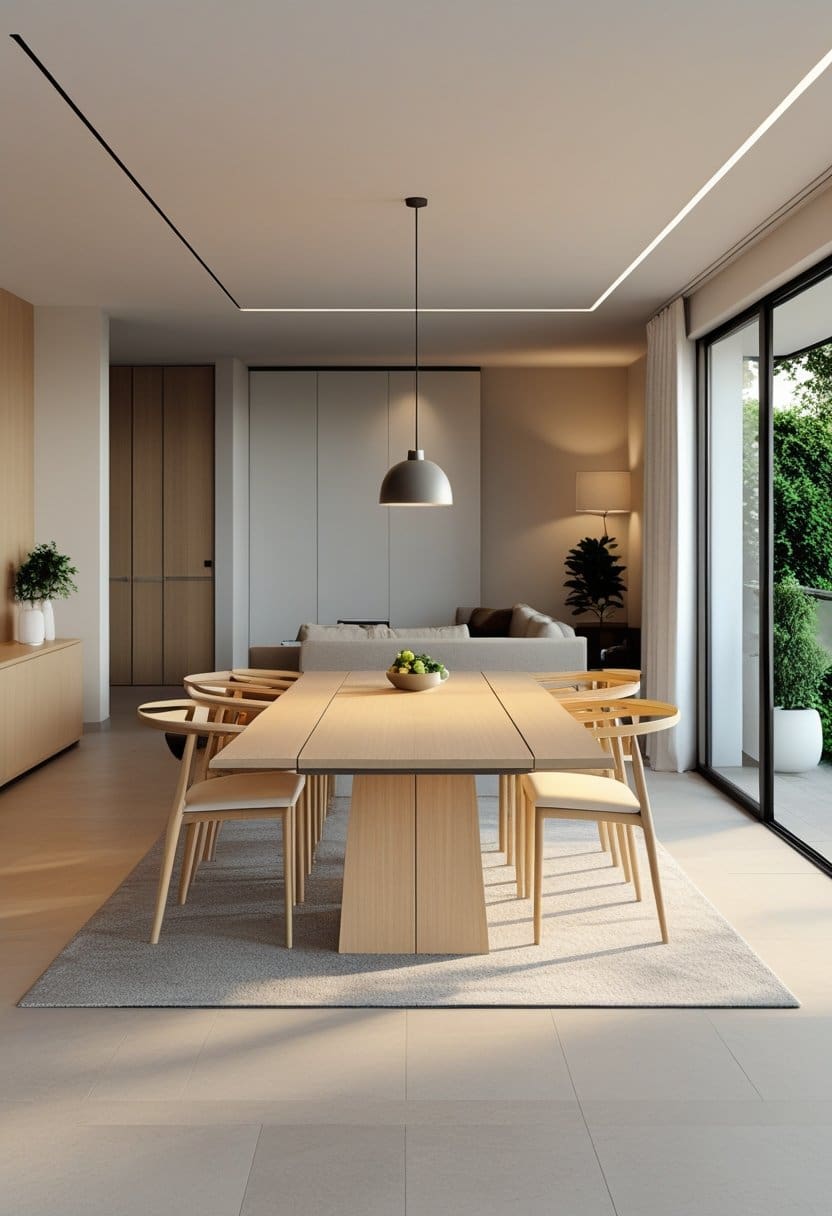
An extendable table is one of the most practical living and dining room combo ideas, especially if you like to host guests.
- Keep the table small for everyday use.
- Extend it when you have visitors or family gatherings.
- Store extra chairs or folding chairs in a closet or under the stairs.
Why it’s helpful:
- You don’t lose precious floor space on a large table that you rarely use.
- Your combo room stays flexible and adapts to your needs.
13. Add Visual Symmetry for a Calm Look
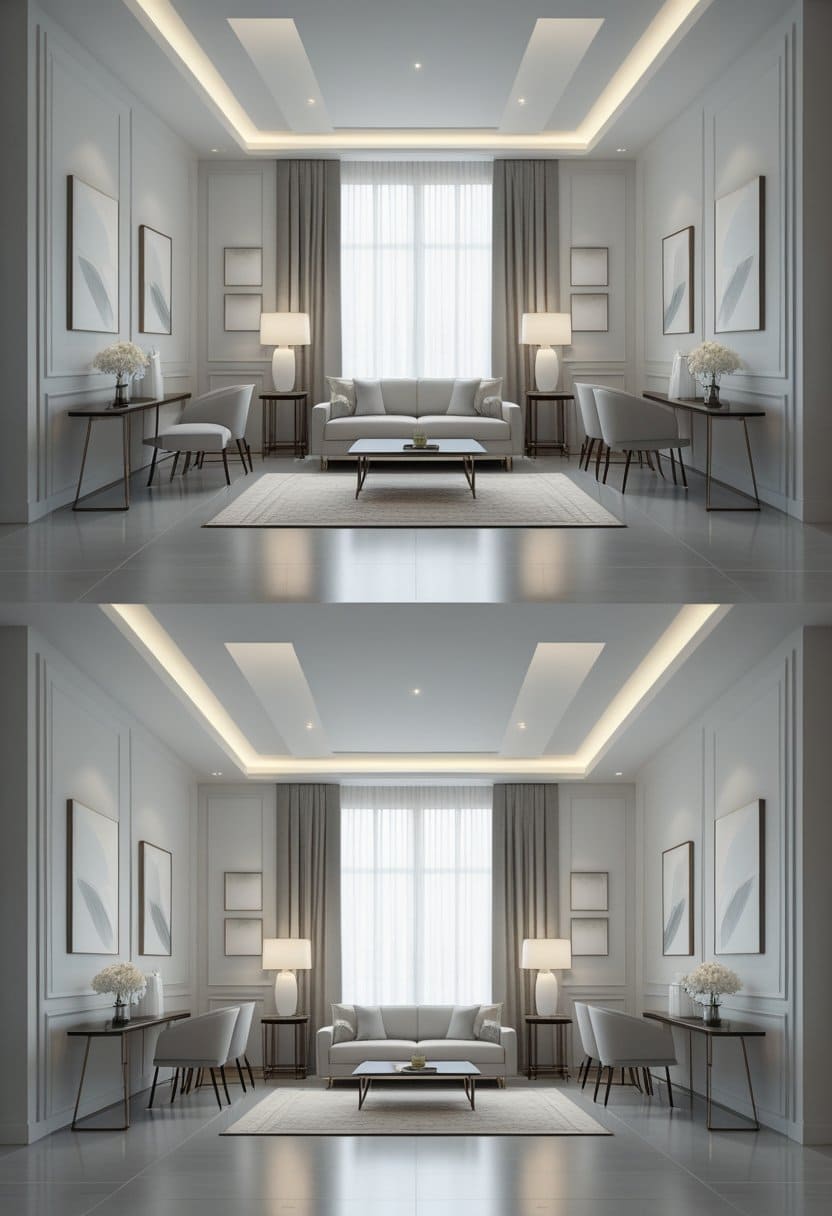
Symmetry can make a living dining combo feel more organized and calming.
Try:
- Two matching lamps on either side of the sofa.
- Matching or coordinated dining chairs.
- Art hung at similar heights in both zones.
Effect:
- The space feels balanced instead of chaotic.
- Your eye moves smoothly around the room.
- This is especially helpful when you’re working with many pieces of furniture.
14. Use a Gallery Wall to Anchor the Living Area
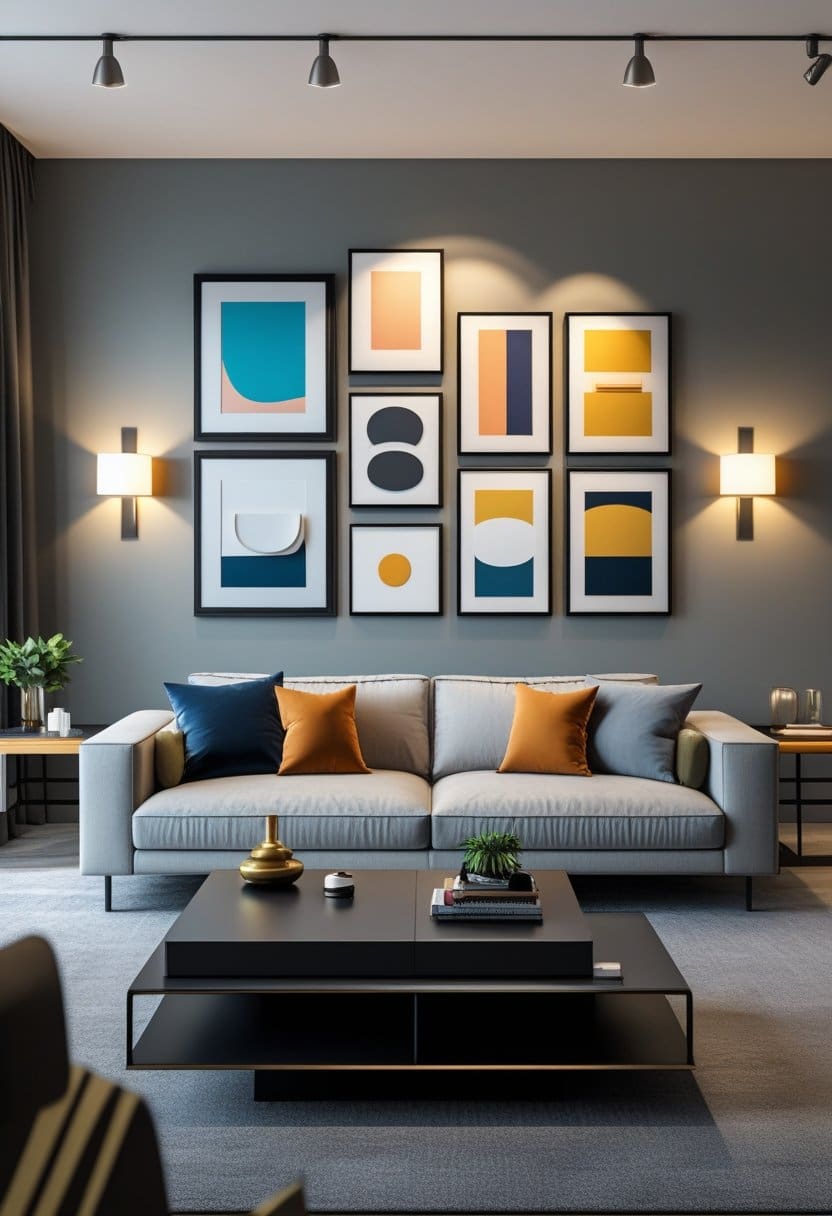
A gallery wall or a large piece of art is a great way to clearly mark the living area.
- Hang a group of framed photos or prints above the sofa.
- Use frames and colors that tie in with your cushion and rug choices.
- Keep the dining area wall more minimal for contrast.
Why this works:
- The living zone becomes the “visual focus” of the room.
- The dining side naturally feels like a separate, calmer space.
15. Add Open Shelving or a Bookcase as a Divider
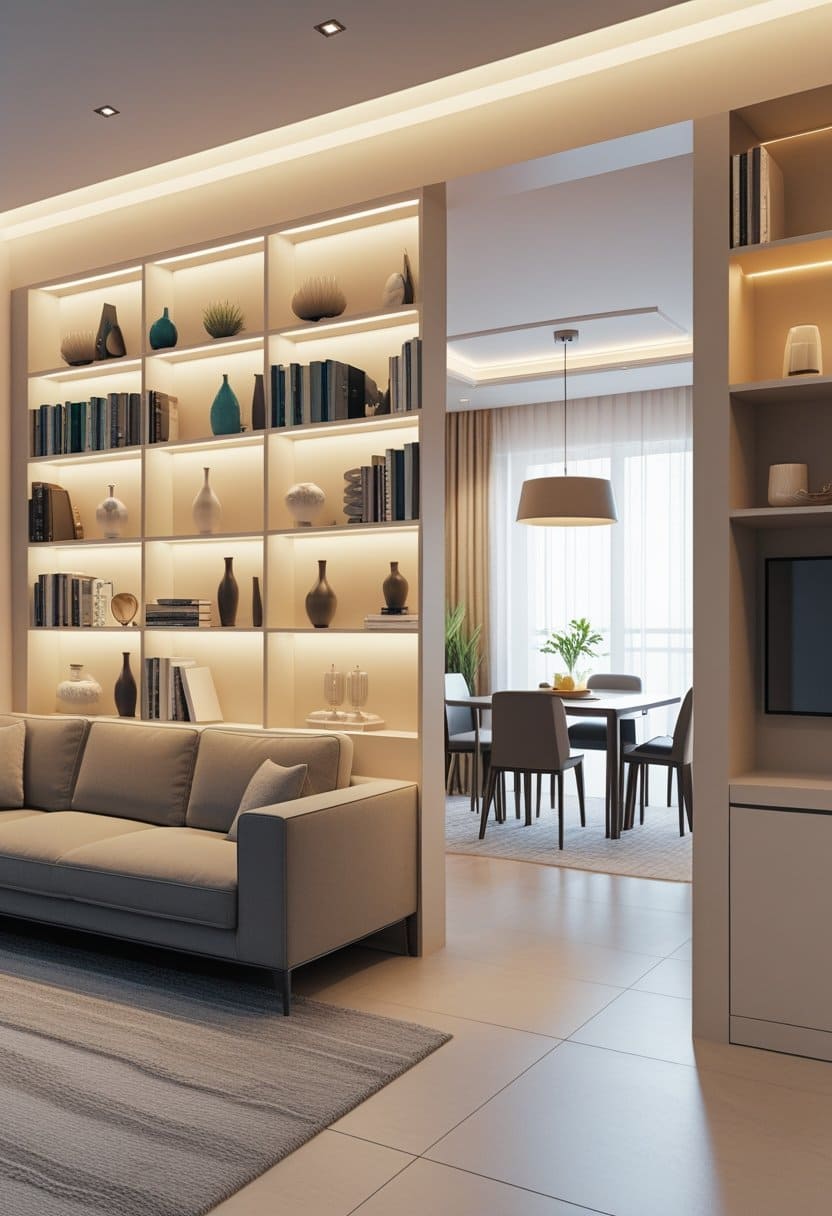
Instead of a solid wall, a low bookcase or open shelving unit can act as a light divider between living and dining.
Options:
- A low cabinet behind the sofa with storage and decor on top.
- An open shelf unit that you can see through from both sides.
- A stylish bar cabinet that also marks where dining starts.
Benefits:
- You create gentle separation without making the room feel smaller.
- You gain extra storage for books, dishes, or decor.
- The combo room looks purposeful and stylish.
16. Use Mirrors to Make Both Areas Feel Bigger
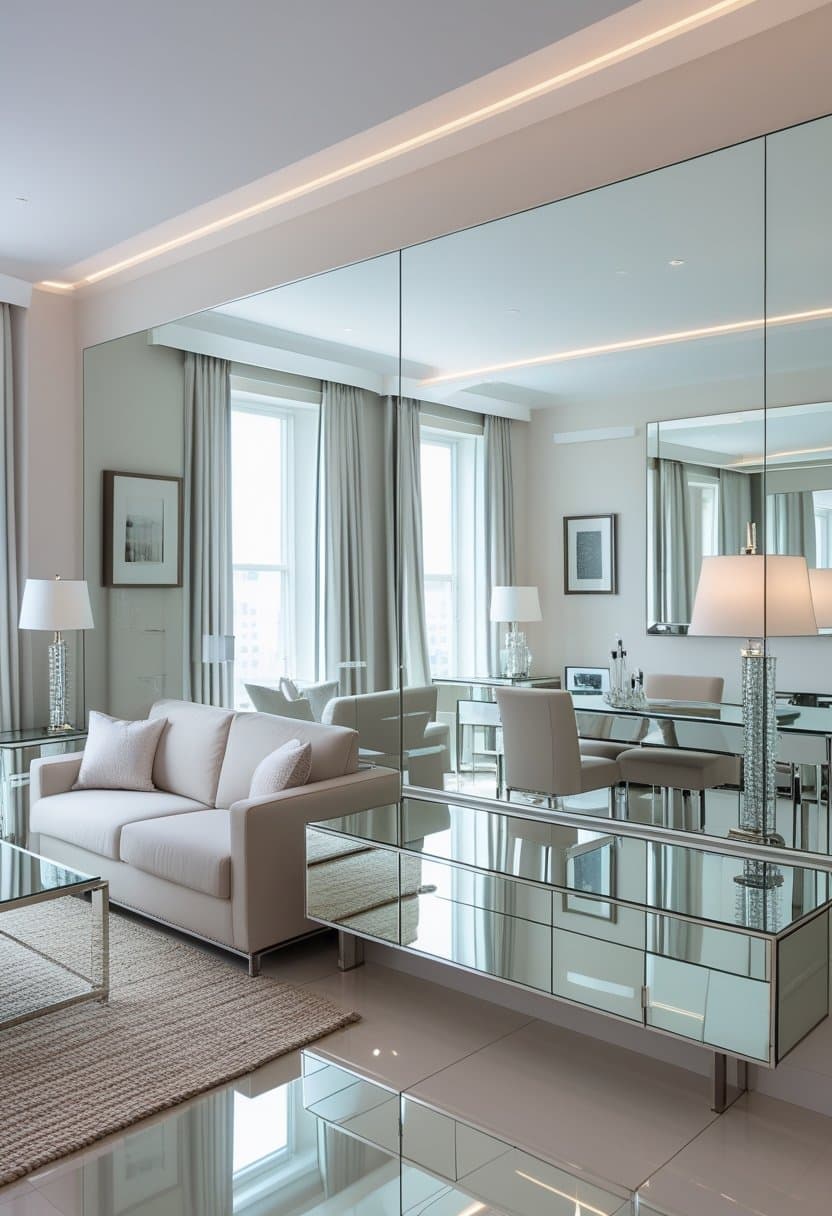
Mirrors are a classic design trick, and they’re especially helpful in a small living dining combo.
Ideas:
- Hang a large mirror on the wall opposite a window to reflect light.
- Place a mirror above a sideboard or console in the dining area.
- Use mirrored or glass surfaces (like a glass dining table) to reduce visual weight.
Results:
- The room feels brighter and more open.
- The line between living and dining becomes softer and more elegant.
17. Play with Height and Scale
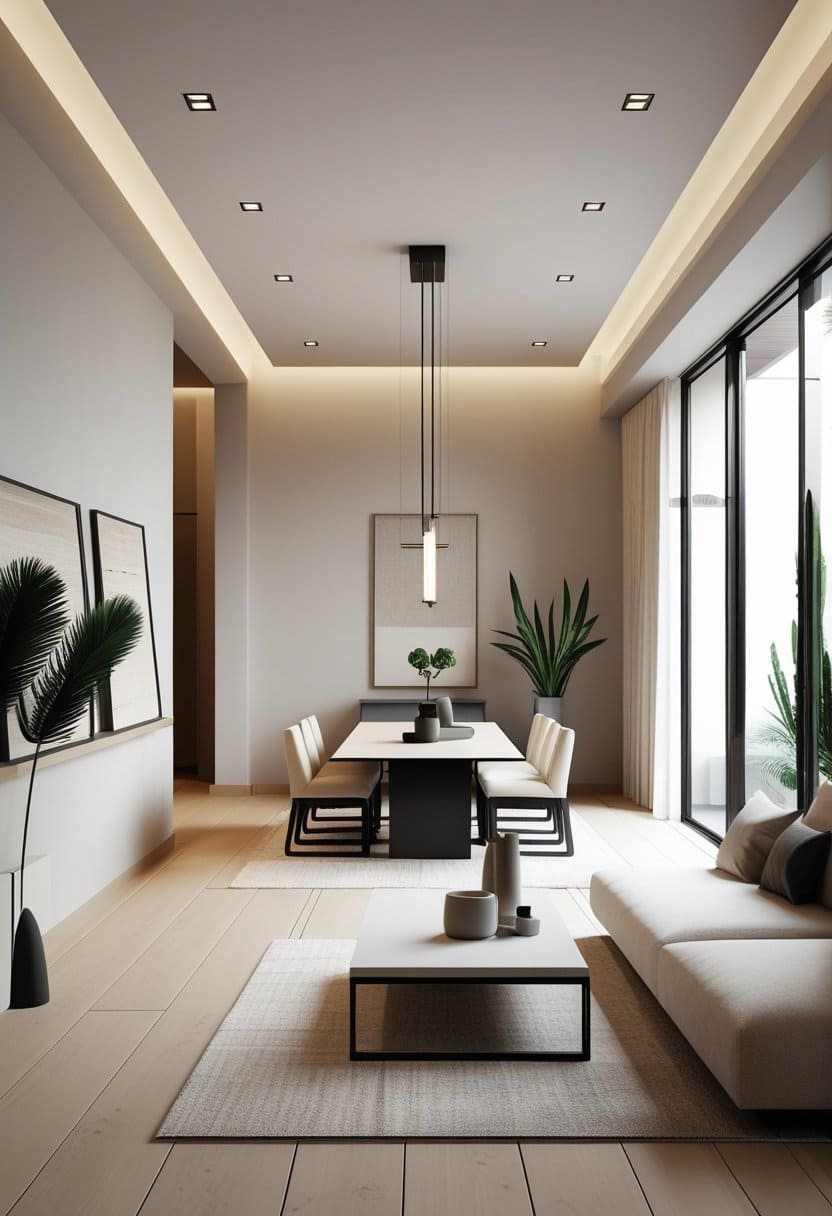
Height differences can help define each zone, even in one continuous room.
Try this:
- A low, comfortable sofa and coffee table in the living area.
- A taller dining table with a striking pendant light above it.
- Art hung higher in the dining zone and lower, more relaxed pieces in the living zone.
Why it works:
- Your eye recognizes these height changes and understands that each area has a different purpose.
- The room feels dynamic rather than flat.
18. Make It Family-Friendly with Smart Storage
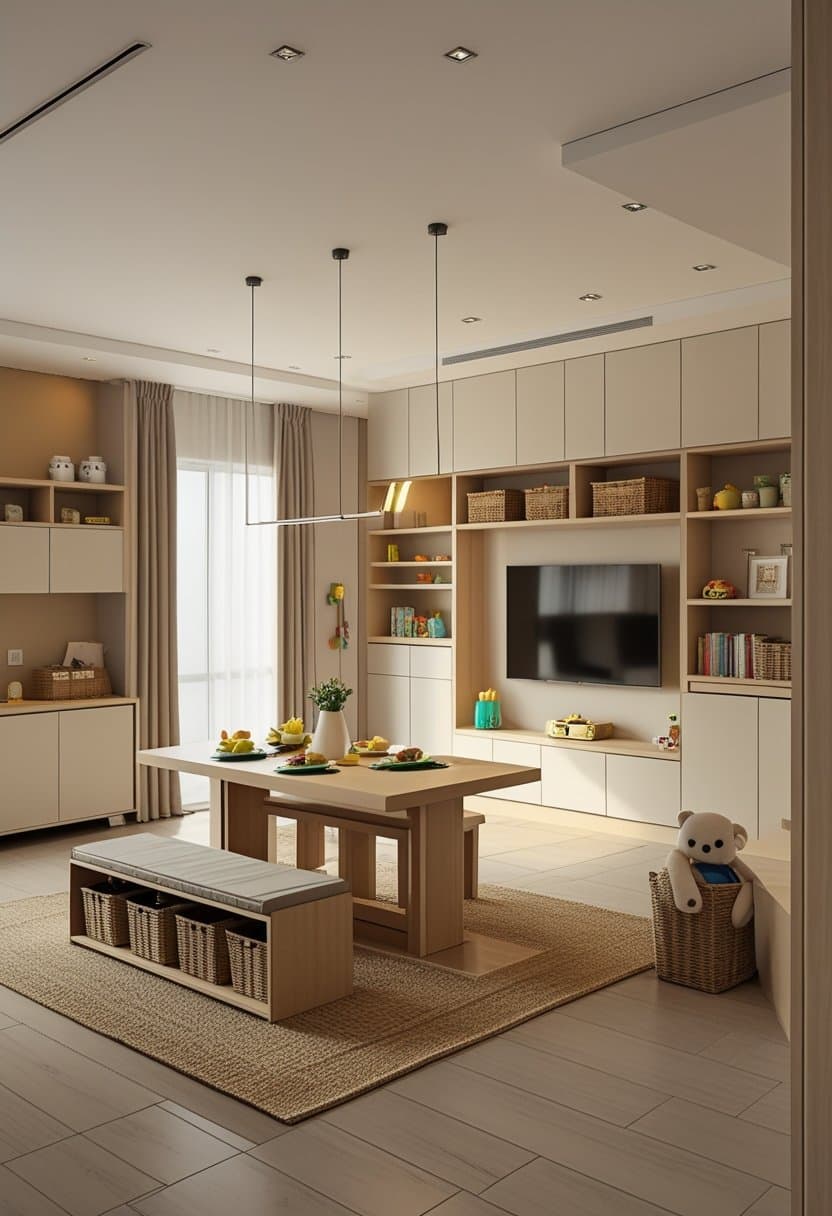
For families, a living dining combo often has to handle toys, homework, meals, and TV time all in one place.
Helpful ideas:
- A sideboard or cabinet in the dining area for games, homework supplies, and table linens.
- Storage baskets under the coffee table or TV stand for toys and blankets.
- A bench with lift-up storage near the table.
Benefits:
- Clutter has a home, so the room stays tidy and calm.
- The same space can be used for dinner, studying, and relaxing without feeling messy.
19. Design a Combo Room That’s Great for Entertaining
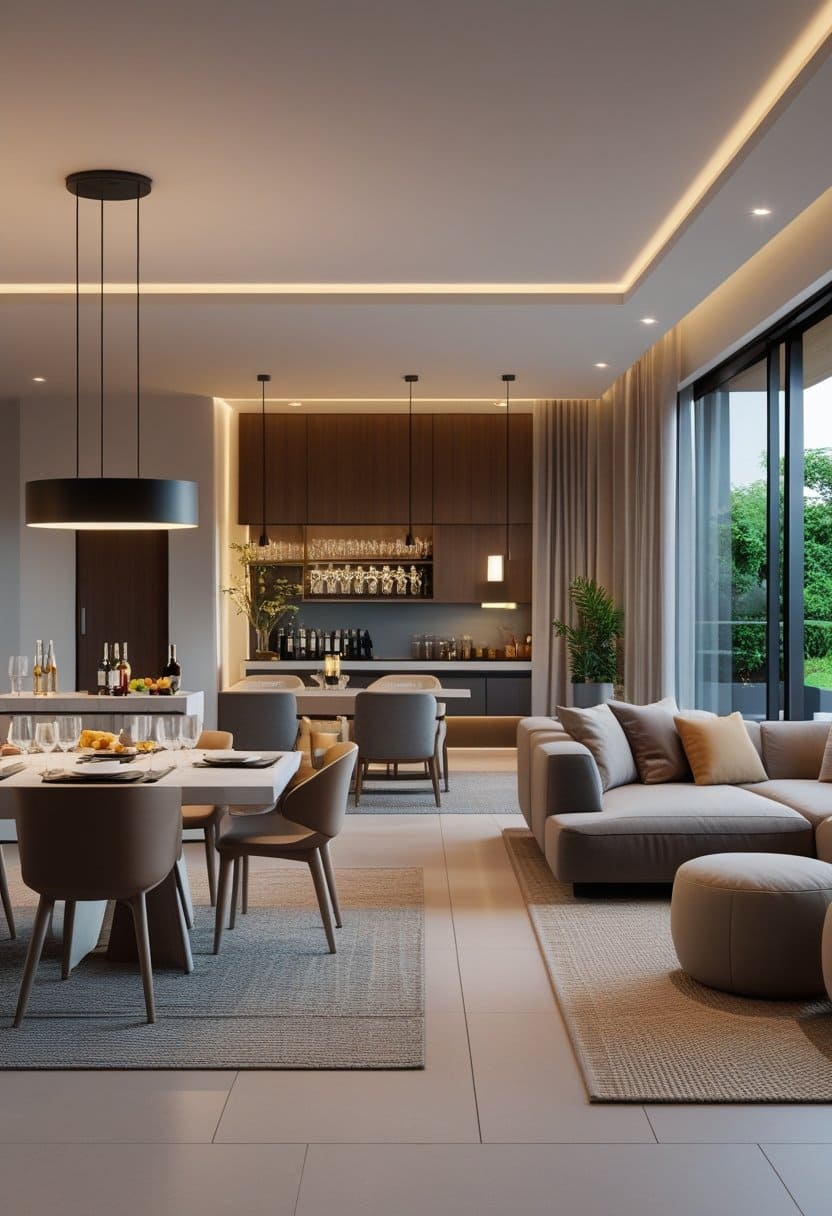
If you love having people over, your living and dining room combo can be the ultimate social zone.
Ideas for hosting:
- Keep the dining table close to the living area so conversations can flow easily.
- Add a bar cart or small drinks station near the dining side.
- Use flexible seating: poufs, stools, and extra chairs that can move between table and sofa.
Why this is powerful:
- Guests can move freely between sitting, eating, and chatting.
- You can serve food on the table while people relax on the sofa.
- The whole room feels like one big, welcoming gathering space.
Planning Your Living Dining Combo
To bring all these 19 living dining combo ideas together, follow a simple step-by-step approach:
- Measure your room
- Note the length, width, and any doors or windows.
- Sketch a simple floor plan on paper or use a free online planner.
- Decide your main priorities
- Do you need more seating for relaxing or more chairs for dining?
- Do you host often, or is it mostly for everyday family use?
- Choose your color palette and style
- Pick 2–3 main colors and a style (modern, cozy, classic, minimal).
- Use that as a guide when buying or moving furniture.
- Place the big items first
- Start with the sofa, dining table, and storage pieces.
- Then add chairs, side tables, lamps, and decor.
- Layer in details
- Rugs, lighting, cushions, art, and plants are the final touches.
- These details link both areas and make the room feel complete.
Conclusion
Designing one room to serve as both living and dining space can feel tricky at first, but it’s also an opportunity to create a warm, flexible, and stylish heart of your home.
By using these 19 living dining combo ideas—from clever furniture placement and lighting to smart storage and color choices—you can:
- Clearly define each zone
- Keep the room open and airy
- Make everyday life more comfortable
- Welcome guests with ease
You don’t need a huge house or a big budget to enjoy a beautiful, practical living dining combo. With a bit of planning, simple changes, and thoughtful details, your shared space can become one of the most charming and functional areas in your home.