19 Smart Small Living Room Ideas to Maximize Space and Style
Introduction
Creating a beautiful living room in a small space can feel challenging, but it’s absolutely possible with the right plan. A compact room can be just as comfortable, stylish, and welcoming as a large one; it just needs a little more thought and intention.
This guide shares 19 small living room ideas that help you make the most of every inch. You’ll find practical tips, simple layout tricks, and clever styling suggestions you can start using right away. The language is kept clear and easy so anyone can follow along, whether you’re decorating your first apartment or updating a long-loved home.
Why Small Living Rooms Are Worth the Effort?
A small living room has some secret advantages:
- It’s usually cheaper and quicker to decorate.
- You can create a cozy, intimate feel more easily.
- Every choice you make has a big impact, so small changes go a long way.
Instead of seeing the size as a limitation, think of it as a chance to design a space that works perfectly for your life. The small living room ideas below will help you do exactly that.
1. Start with a Light and Cohesive Color Palette
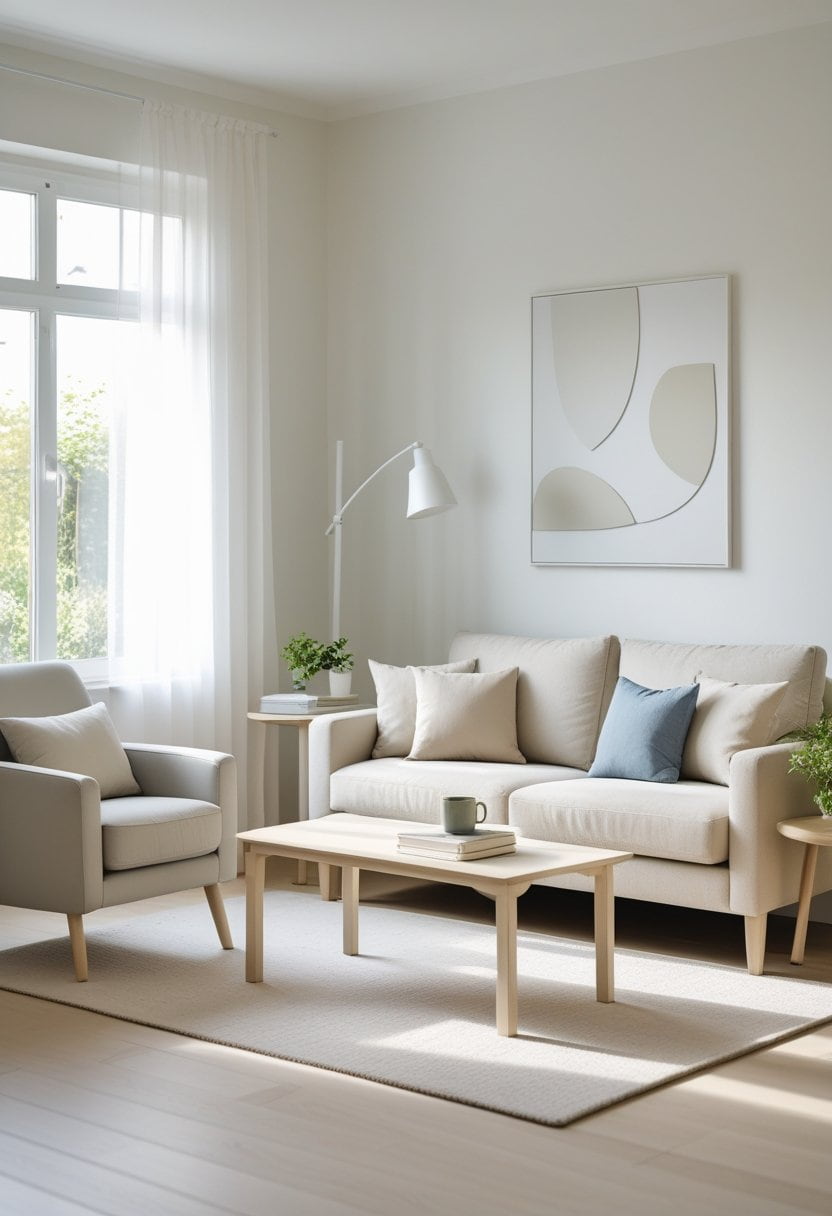
Color is one of the simplest ways to make a small living room feel bigger and brighter.
- Choose light, soft colors for walls, such as off-white, pale gray, or gentle beige.
- Keep the main furniture pieces in similar tones.
- Add darker or richer colors in small accents like cushions and throws.
Why it works:
Light colors reflect more light, which makes the room feel more open. A cohesive palette also reduces visual clutter, helping the space look calm and well-organized.
Practical tip:
Choose two main colors and one accent color. Use the main colors for walls and larger furniture, and the accent for small decor items.
2. Choose Multi-Functional Furniture
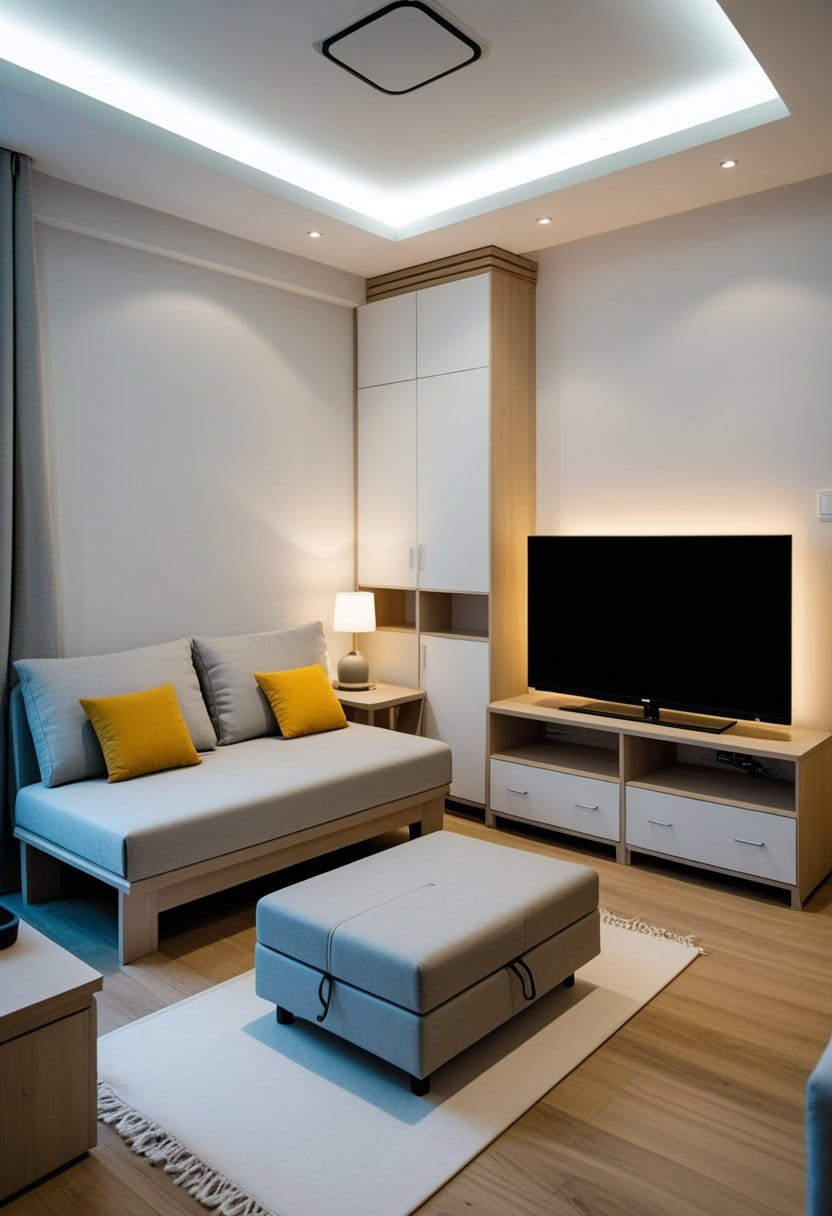
When space is tight, every piece of furniture should earn its place.
Great multi-functional options include:
- A sofa bed for guests.
- An ottoman with hidden storage instead of a standard coffee table.
- A TV unit with drawers or cabinets for extra storage.
- Nesting tables that can be pulled out when needed and tucked away afterward.
These small living room ideas help you combine comfort, storage, and flexibility without filling the room with too many pieces.
3. Scale Down Your Sofa (and Consider a Loveseat)
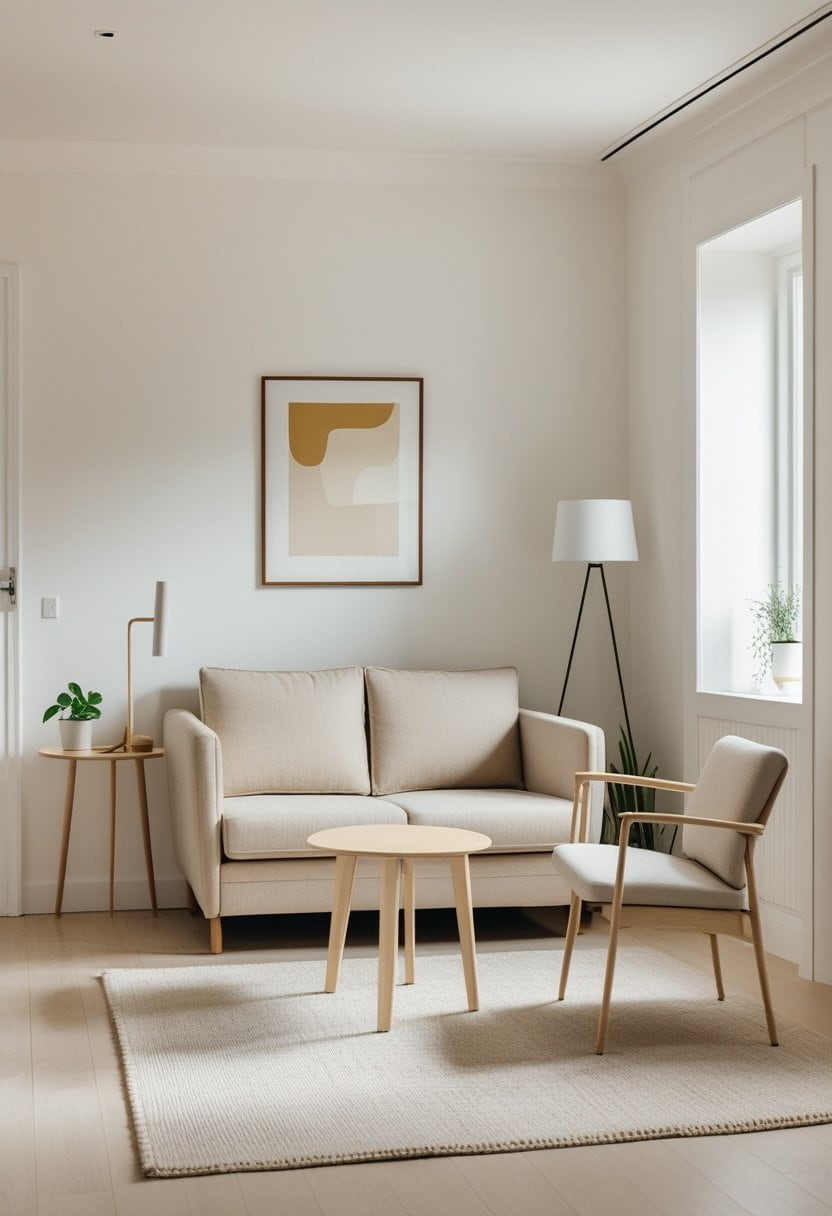
In a small living room, a huge sofa can overwhelm the space and block movement.
Instead:
- Choose a compact sofa or loveseat with slim arms.
- Avoid bulky designs with oversized cushions.
- Consider a two-seater plus an accent chair instead of a large sectional.
Layout idea:
Place the sofa against the longest wall, and add a small chair opposite or at an angle to create a cozy conversation area.
4. Use Vertical Space with Shelves and Tall Storage
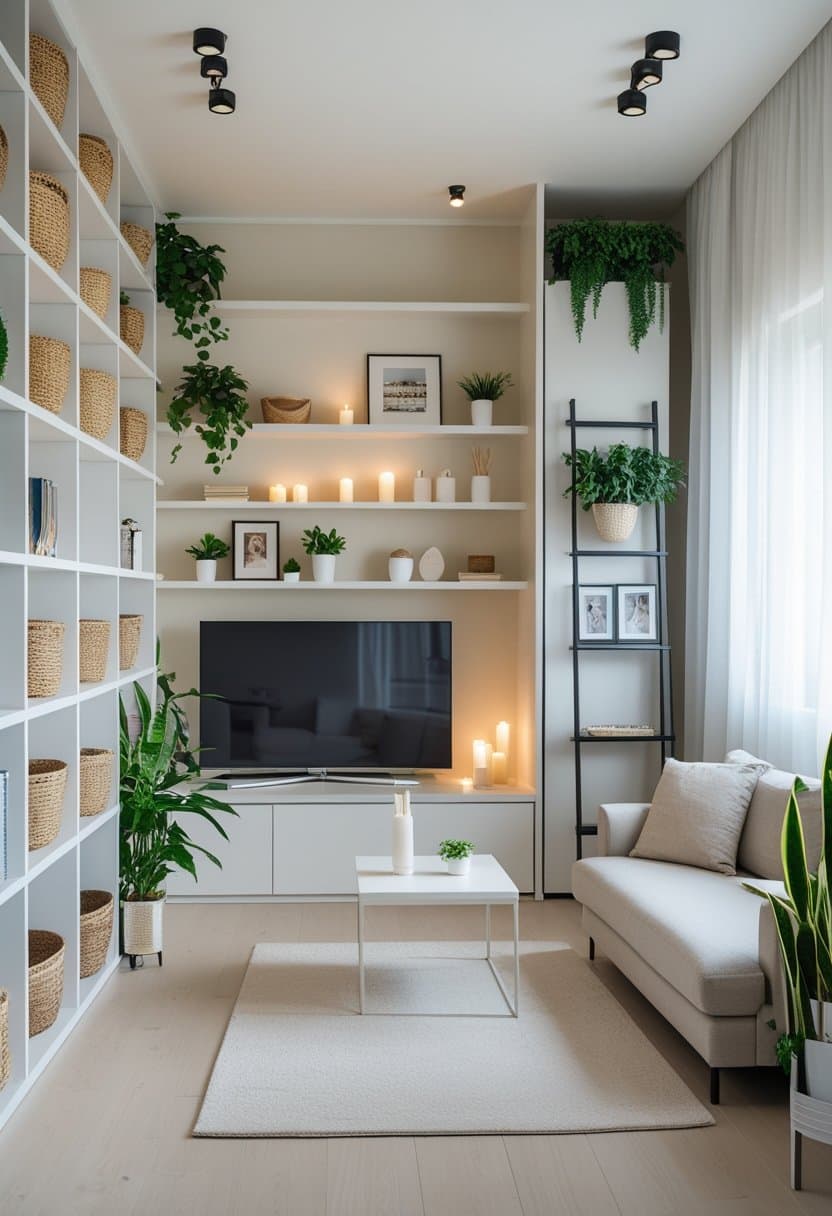
When the floor area is limited, think upward.
Some helpful vertical storage ideas:
- Tall bookcases that reach close to the ceiling.
- Wall-mounted shelves above the sofa or TV.
- A slim ladder shelf for books, plants, and decor.
- Vertical cabinets or wardrobes in corners.
Using vertical space keeps the floor clear, making the room feel bigger while still giving you plenty of storage.
Tip:
Leave some space at the top of tall units to avoid a heavy, crowded look. A few open shelves or decorative items can keep things feeling light.
5. Plan Clear Walkways and Traffic Flow
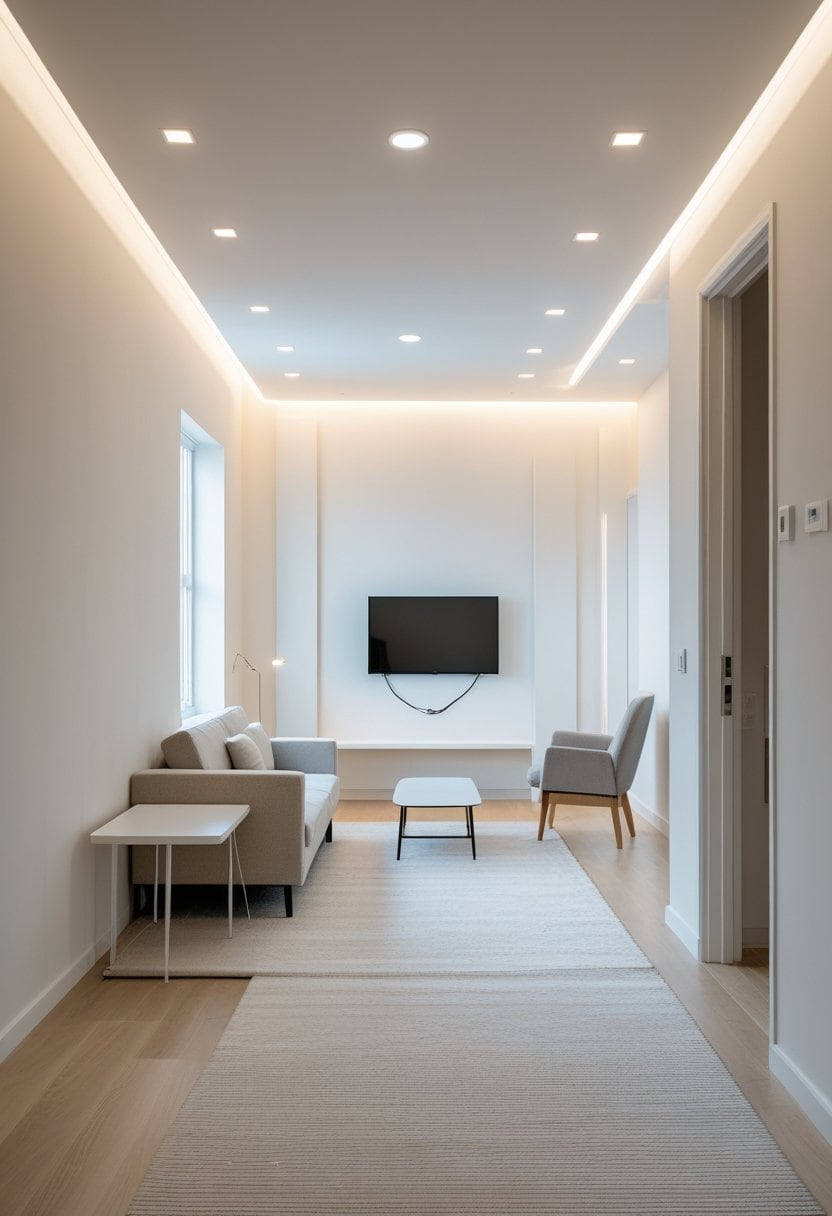
Even the best small living room ideas won’t work if you can’t move comfortably through the space.
- Make sure there is a clear path from the door to the seating area.
- Avoid placing furniture where people need to squeeze past.
- Keep coffee tables and ottomans at a comfortable distance from seating (usually about 40–45 cm / 16–18 inches).
You’ll immediately feel the difference when the room flows well. It will feel larger, more peaceful, and easier to use.
6. Use Mirrors to Reflect Light and Create Depth
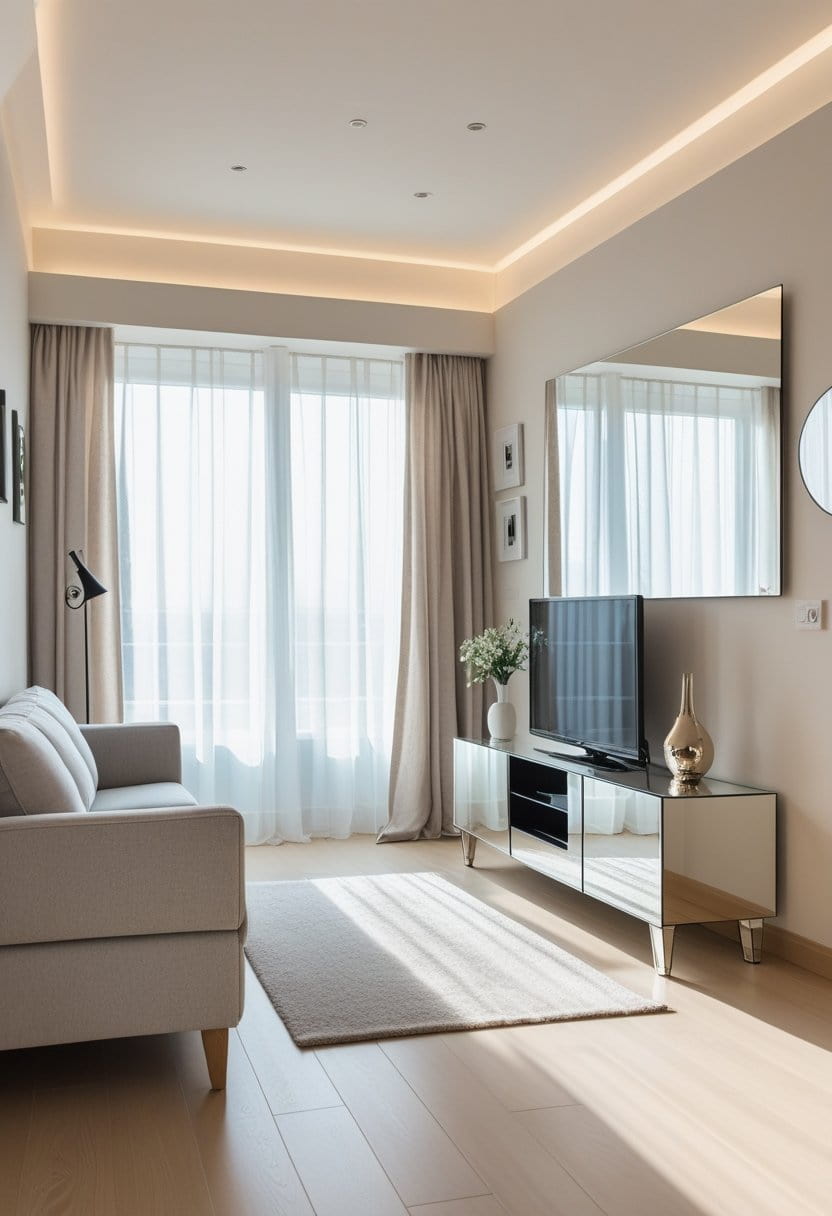
Mirrors are a classic trick for small spaces for good reason.
Ways to use mirrors:
- Hang a large mirror opposite a window to reflect natural light.
- Use a mirrored console table or mirror-front cabinet.
- Create a gallery wall that includes one or two mirrors along with art.
Mirrors visually double what they reflect, which can make a small living room feel more open and airy.
7. Let in as Much Natural Light as Possible
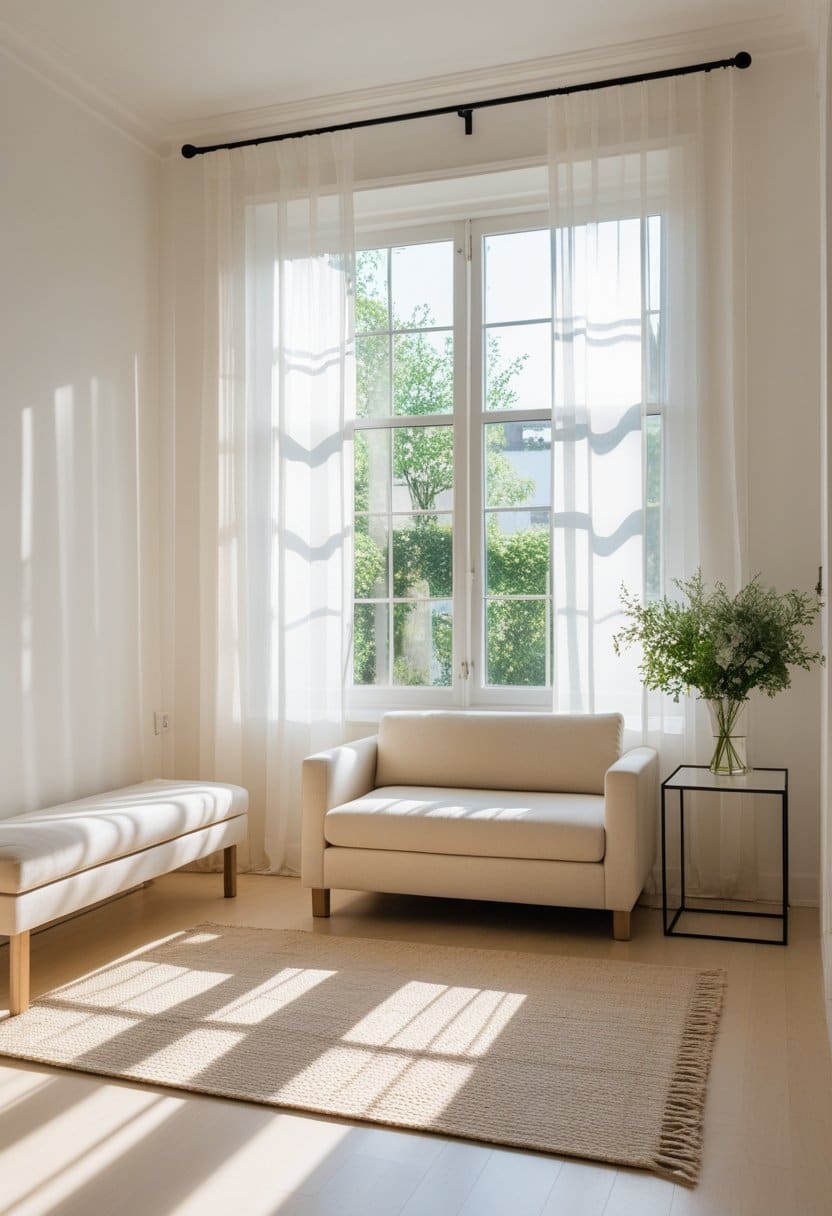
Natural light is your best friend in a small room.
- Use sheer curtains instead of heavy drapes.
- Hang curtain rods higher and wider than the window frame to make windows look larger.
- Avoid blocking windows with tall furniture.
If you don’t have big windows, choose good artificial lighting (we’ll look at that later) and lighter colors to make the most of the light you do have.
8. Define Zones with Rugs
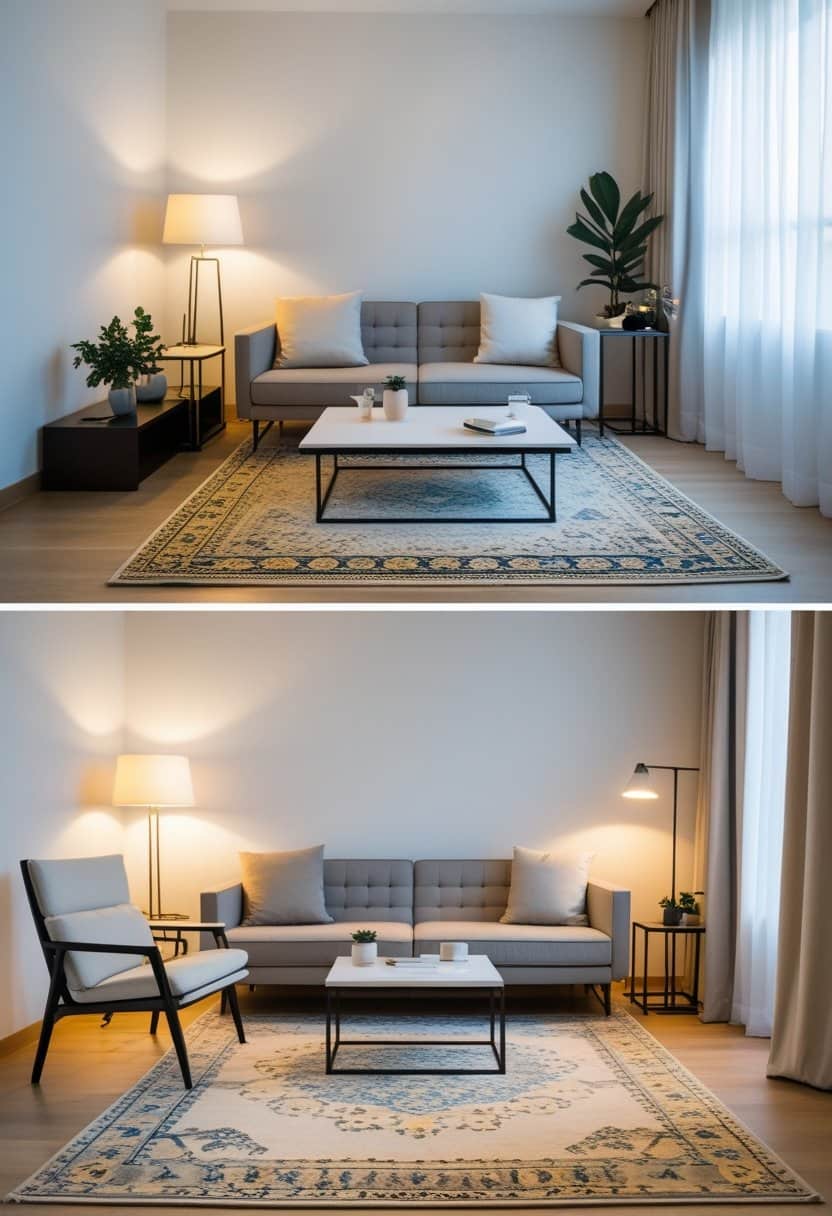
Even in a small living room, it helps to define different areas, such as:
- A seating zone
- A reading nook
- A work corner (if you need a desk)
You can use rugs to subtly separate these zones without needing walls or large furniture. A rug under the sofa and coffee table instantly tells the eye, “This is the living area,” which brings order to the room.
Quick guidelines:
- The front legs of your sofa and chairs should sit on the rug, not off it.
- Choose a rug that’s big enough to anchor the furniture; small rugs can make the room feel smaller.
9. Pick Light, Leggy Furniture
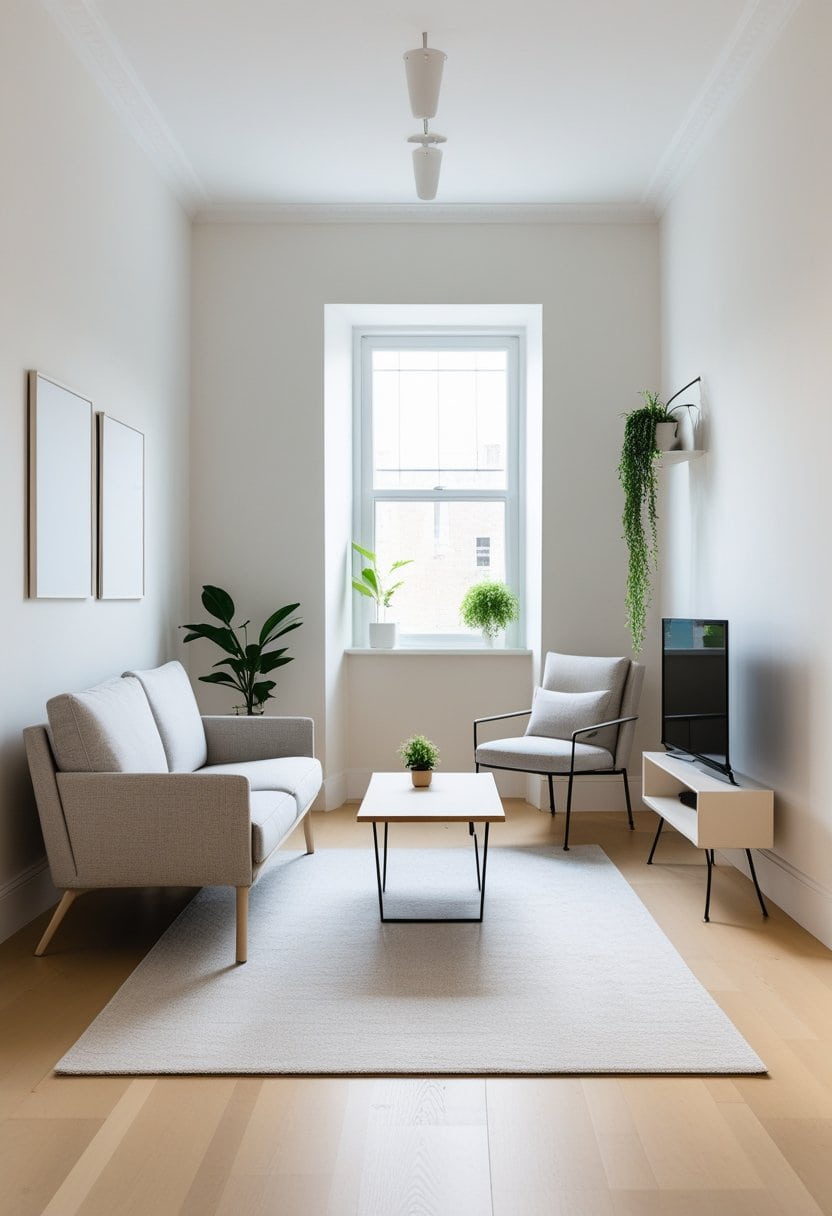
Furniture that sits directly on the floor can feel heavy in a small room. Instead, choose pieces that have visible legs and some open space underneath.
Examples:
- Sofas and chairs on slim legs.
- Coffee tables with open frames.
- TV units with legs instead of solid bases.
This creates more “visual floor space,” making the room feel less crowded.
10. Add Built-Ins or Faux Built-Ins for a Custom Look
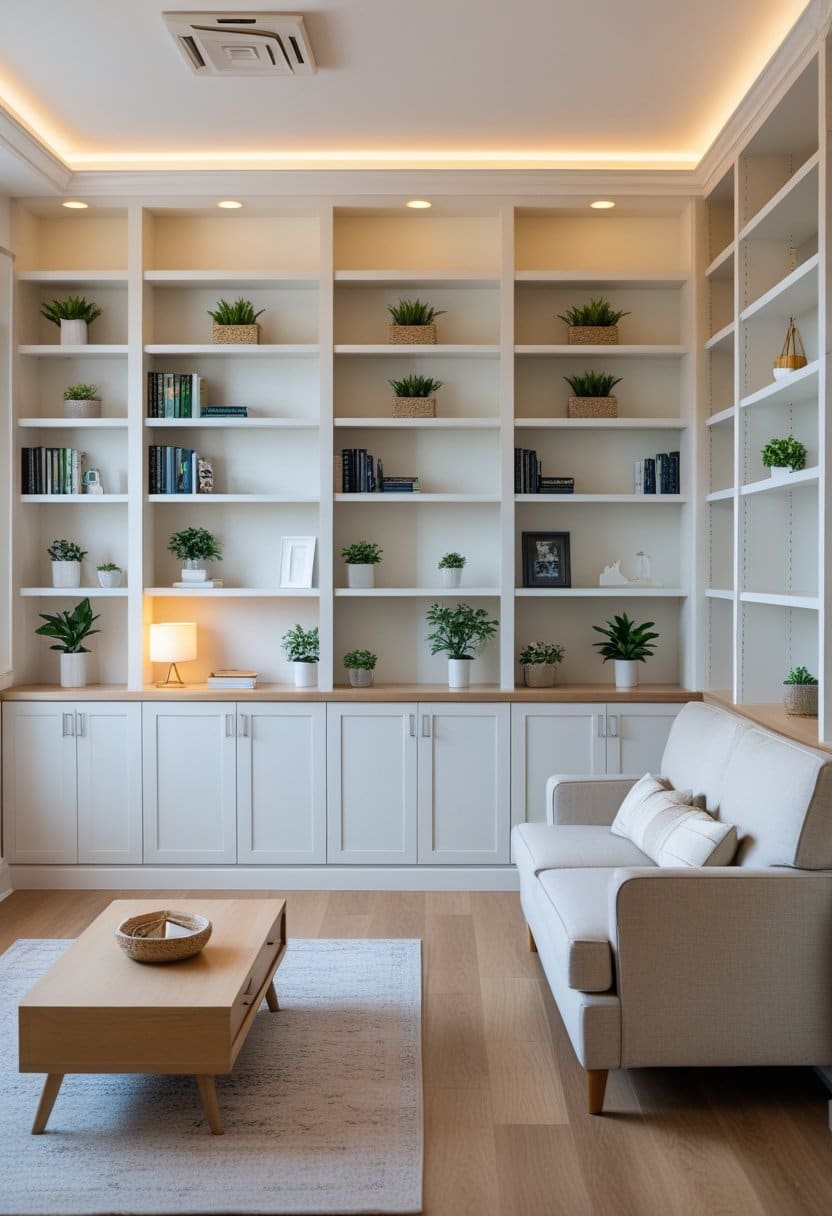
Built-in storage can transform a small living room by using every inch of space.
If full custom built-ins aren’t in your budget, you can create a similar effect by:
- Pushing bookcases side by side along one wall.
- Painting them the same color as the wall to blend in.
- Adding a simple wooden board across the top to “connect” them visually.
Use these units to store books, media, baskets, and decorative items. It keeps clutter out of sight and gives your room a polished, thoughtful look.
11. Keep Clutter Under Control with Smart Storage
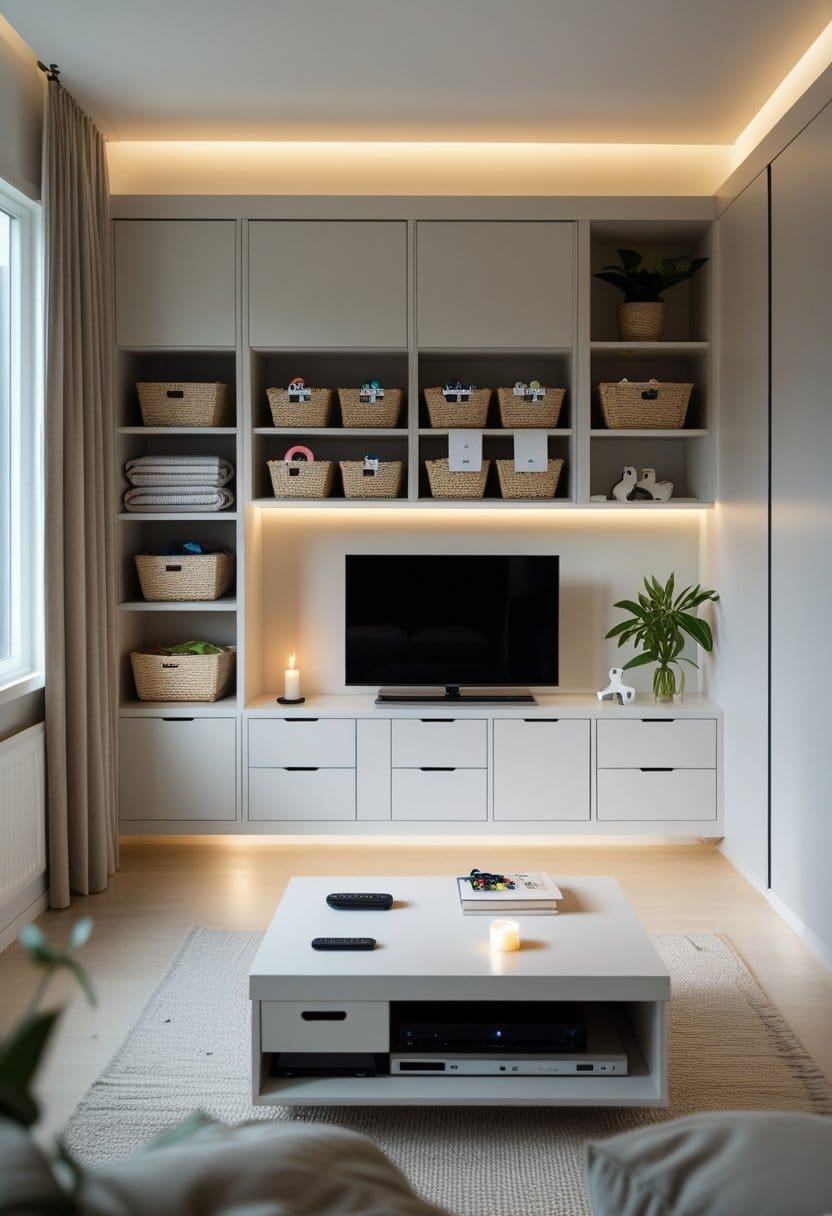
Clutter shrinks a room faster than anything else. A few smart small living room ideas for storage:
- Use baskets on shelves or under the coffee table for remotes, toys, and cables.
- Keep only your favorite decor pieces on display.
- Store off-season items (like heavy blankets) elsewhere if possible.
A simple rule of thumb:
If you don’t use it or love it, it doesn’t need to live in your small living room.
Short, regular tidy-ups—just 5–10 minutes a day—can keep the space feeling calm and inviting.
12. Layer Your Lighting (Not Just One Ceiling Light)
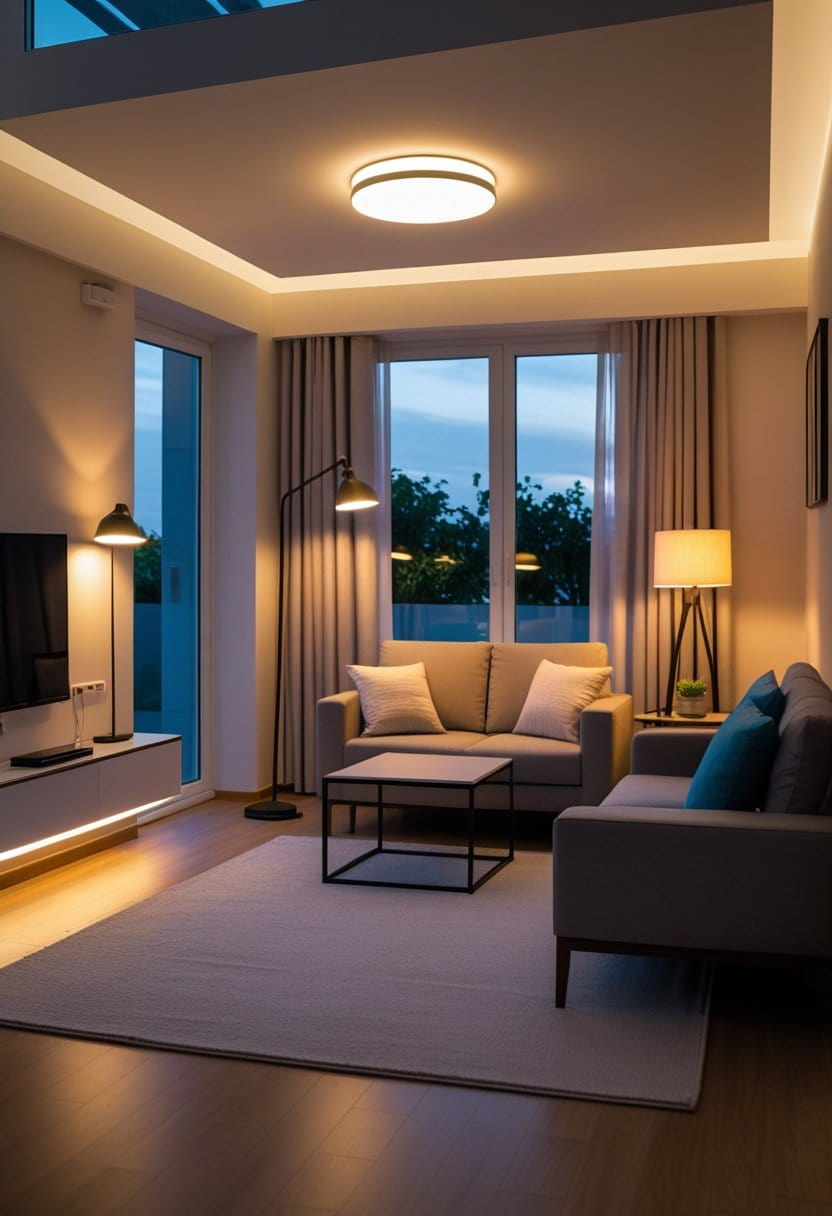
Relying on a single overhead light can make a small living room feel harsh and flat. Instead, aim for layers of light:
- Ambient lighting: ceiling light or flush mount.
- Task lighting: floor or table lamps for reading and working.
- Accent lighting: wall lights, LED strips on shelves, or small lamps.
This layered approach adds depth and warmth, making your room feel more comfortable and flexible for different activities.
Idea:
Place a floor lamp behind or beside the sofa to create a cozy reading corner without taking up much space.
13. Use Glass, Acrylic, and Open-Frame Furniture
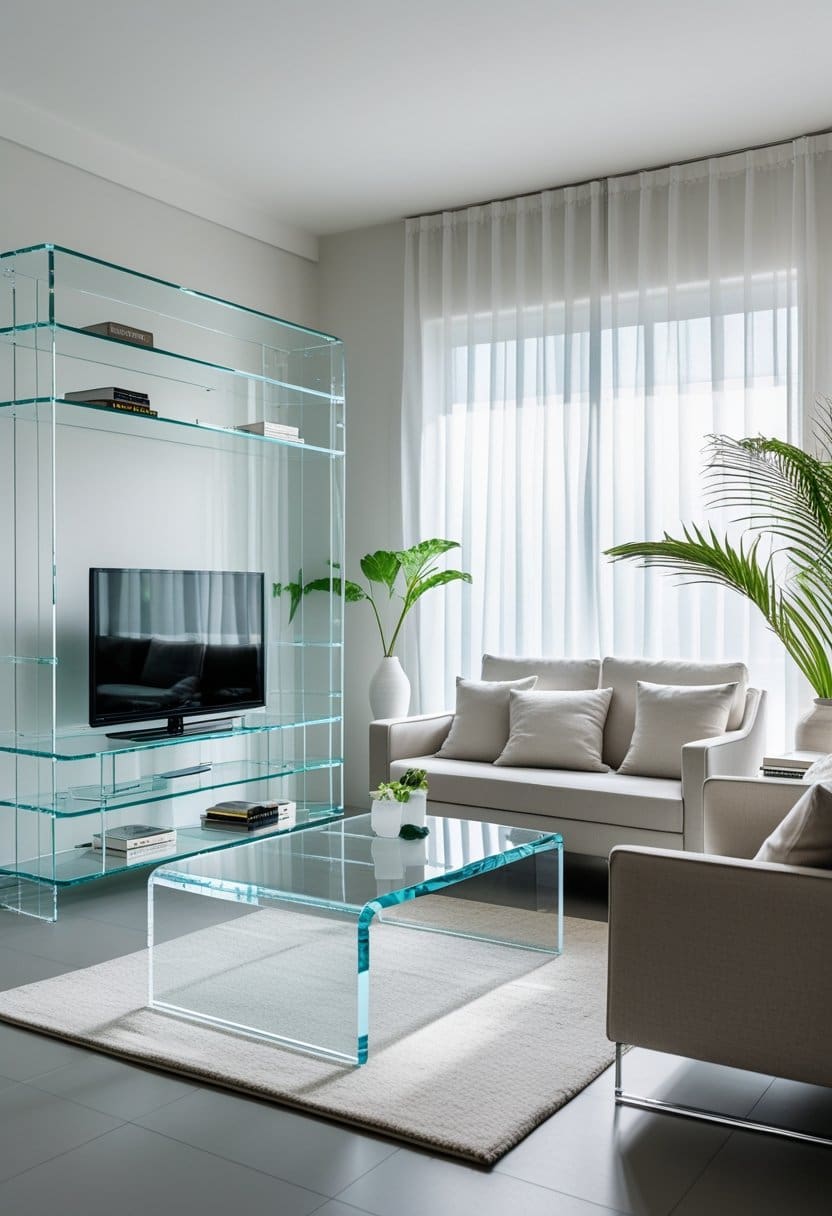
Solid, dark furniture can make a small room feel heavy. Clear or open pieces help the space feel lighter.
Consider:
- A glass or acrylic coffee table.
- Side tables with open metal frames.
- A TV stand with open shelves instead of solid doors (if you can keep it neat).
These choices reduce visual weight and help your small living room ideas shine without overwhelming the room.
14. Hang Art Thoughtfully (Not Too High, Not Too Busy)
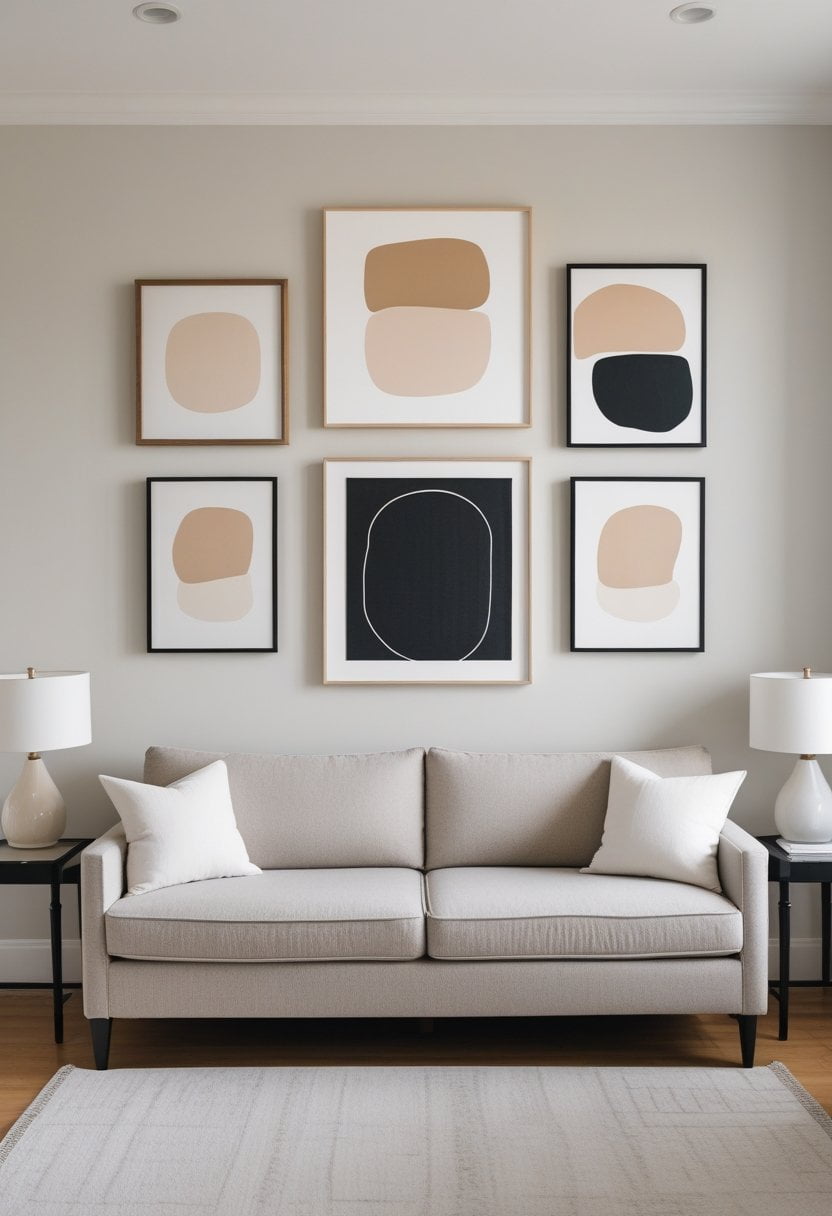
Art adds personality, but it can also make a small room feel cluttered if not handled well.
Guidelines:
- Hang art at eye level for most people.
- Choose a few larger pieces rather than many tiny ones.
- If you create a gallery wall, keep colors and frames coordinated for a calm look.
You can even use art to draw the eye upward, making ceilings feel taller. A vertical piece or a stacked pair of frames works well for this.
15. Create a Strong Focal Point
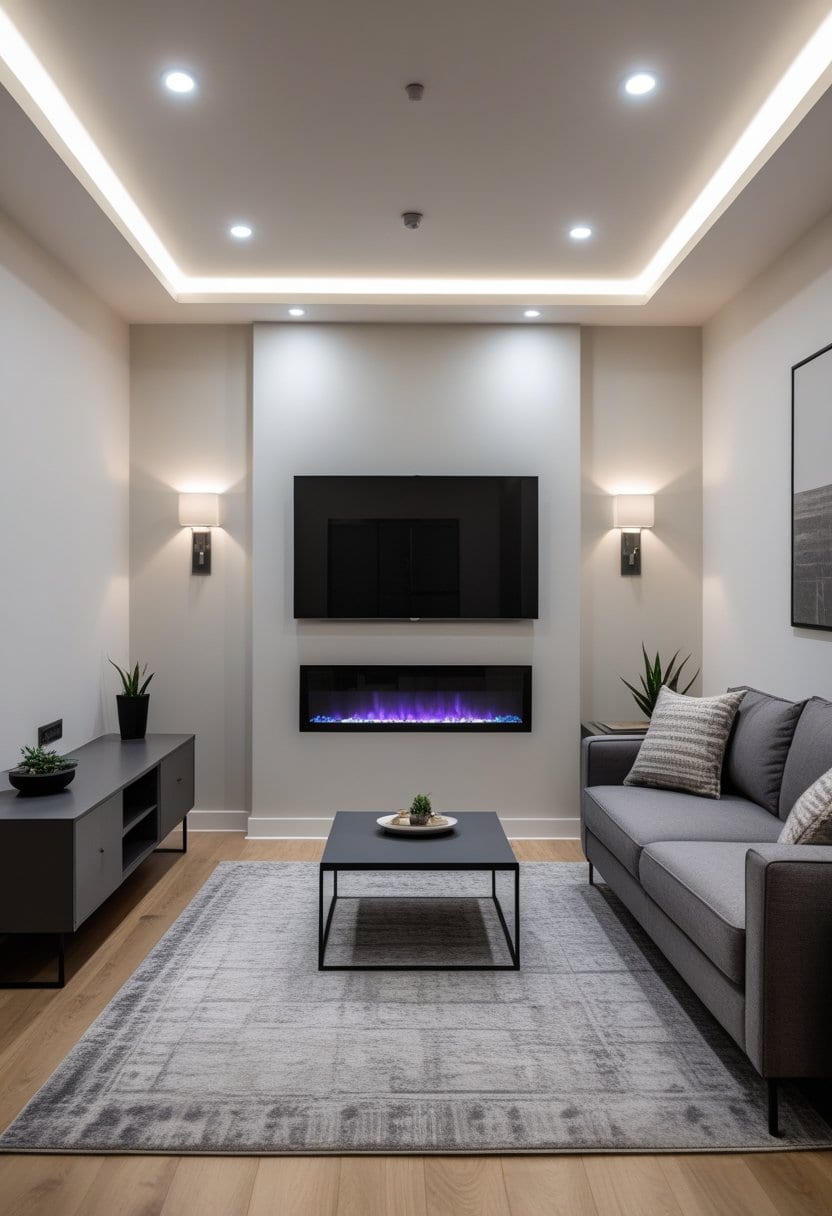
Every room feels more organized when there’s a clear focal point. In a small living room, this might be:
- The TV wall
- A fireplace (real or electric)
- A large piece of art
- A beautiful window
Once you choose your focal point, arrange your seating to face or frame it. Keep that area simple and stylish; avoid too many small items so it remains the star of the room.
16. Use Corners Cleverly
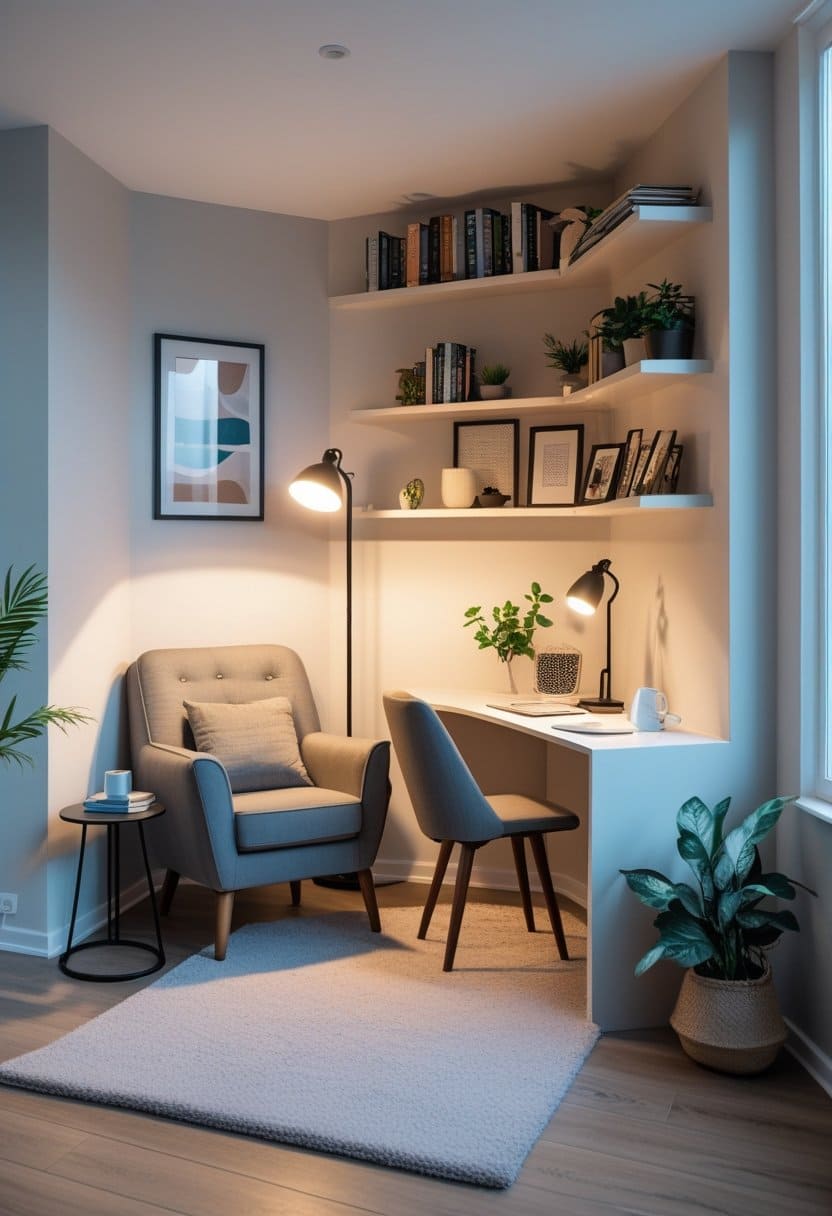
Corners are often wasted space, but they can be incredibly useful in a small living room.
Corner ideas:
- A corner shelf unit for books and decor.
- A small corner desk for working from home.
- A corner plant stand with a tall plant to add height.
- A cozy reading nook with a chair and floor lamp.
By putting corners to work, you free up the main area of the room and make the space feel more complete.
17. Choose the Right Layout for Your Room
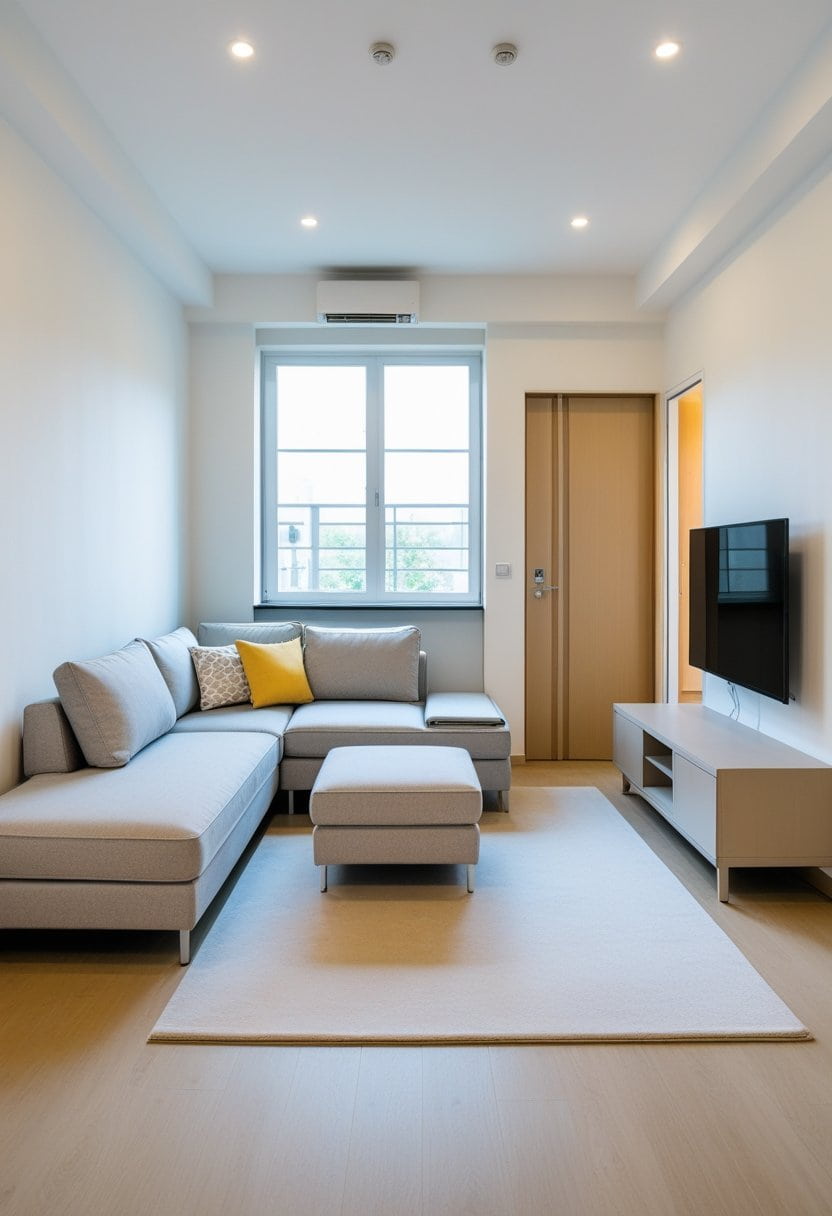
There is no single “perfect” layout; it depends on your room’s shape, doors, and windows. Here are a few layout ideas that often work well in small living rooms:
- Sofa against the longest wall
- Small coffee table in front
- One chair opposite or at an angle
- Media unit on the facing wall
- L-shaped seating
- Compact sectional or sofa + chaise
- Corner used for extra seating instead of wasted space
- Floating furniture layout
- Sofa pulled slightly away from the wall
- Console table or slim storage behind the sofa
- Helps define a clear seating zone in an open-plan space
Try sketching your room on paper or using a simple online planner to test different arrangements before moving heavy furniture around.
18. Add Greenery for Life and Freshness
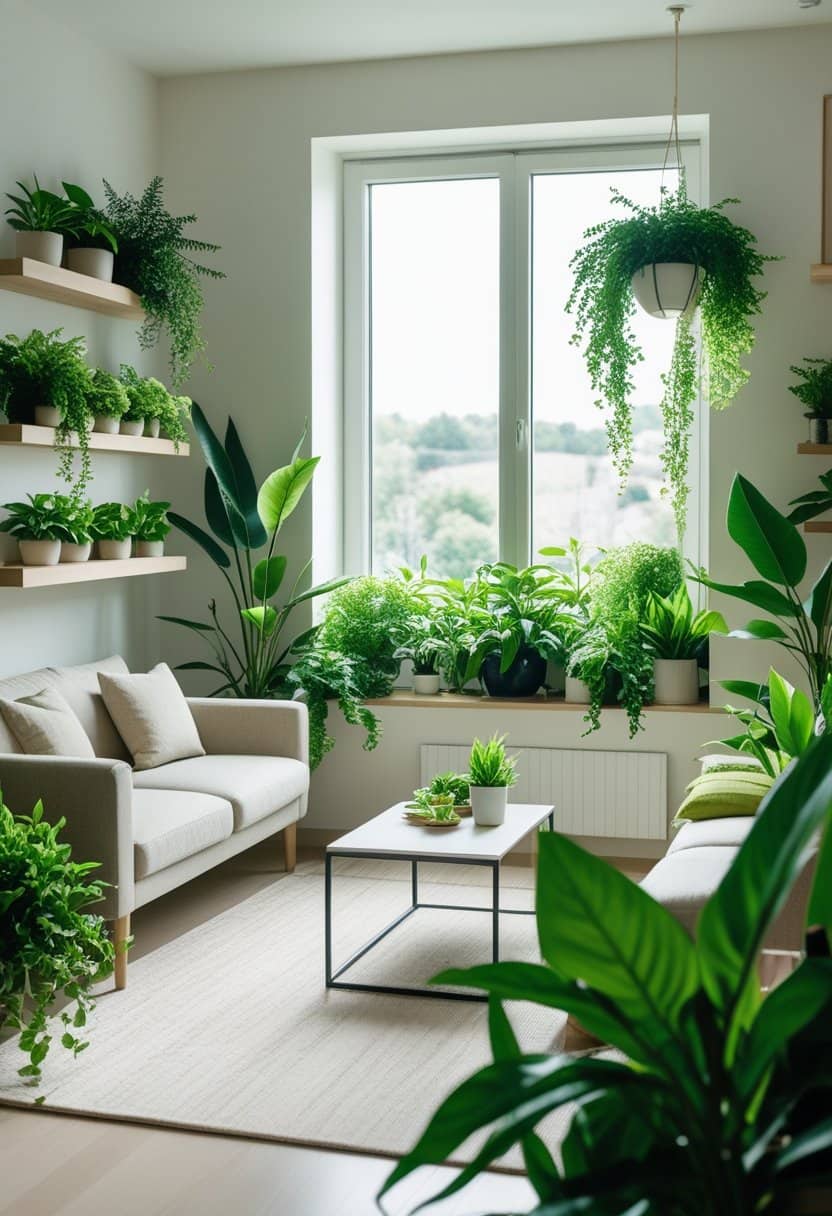
Plants instantly make a room feel more alive and welcoming. They’re one of the simplest small living room ideas you can use.
- Choose tall, slim plants for corners.
- Place small plants on shelves or the coffee table.
- Use wall-mounted planters if floor space is very limited.
If you worry about maintenance, start with easy options like snake plants or pothos. Even one or two plants can soften the look of a small room.
19. Personalize with Texture and Carefully Chosen Accessories
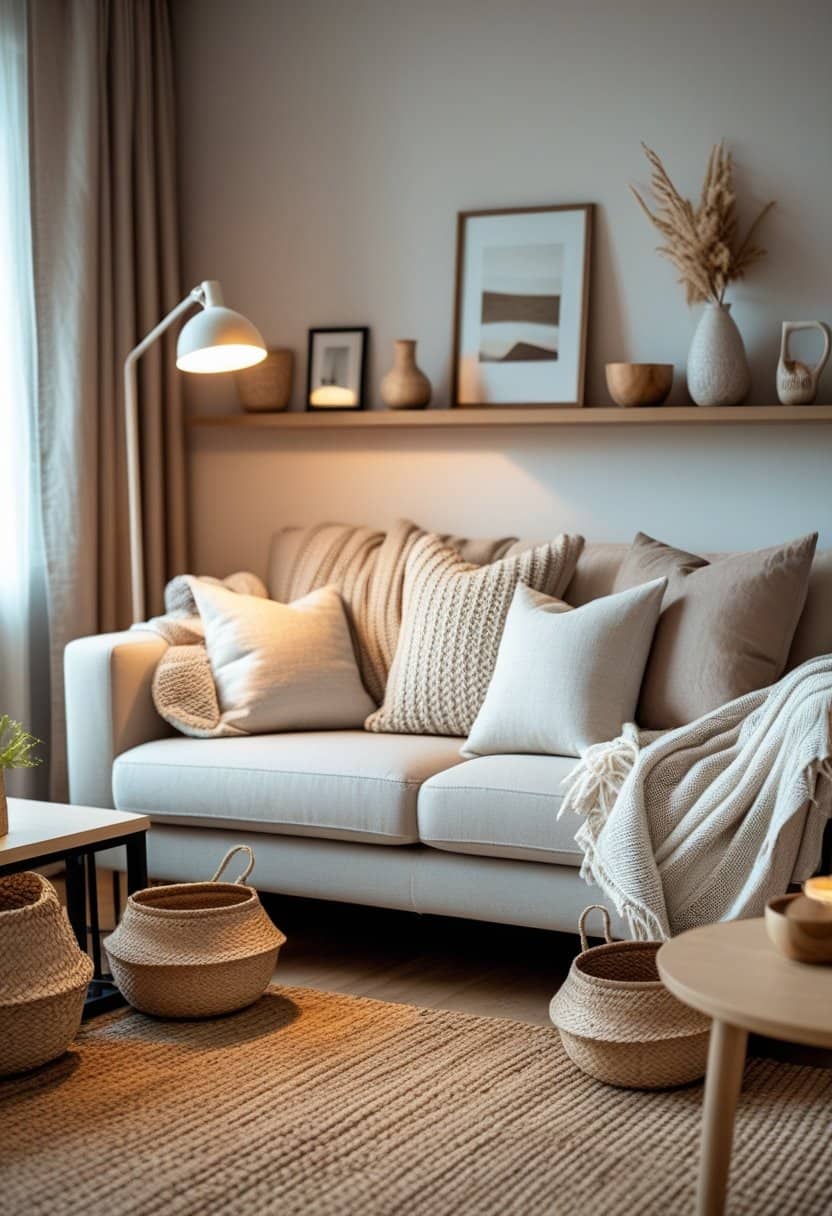
A small living room doesn’t have room for lots of objects, so be selective. Focus on texture instead of quantity:
- Soft throws and cushions on the sofa.
- A textured rug underfoot.
- Woven baskets, wooden elements, or ceramic pieces.
Choose accessories that mean something to you—family photos, travel souvenirs, or favorite books. They’ll make the room feel like home without needing dozens of items.
Less but better is a good rule for small spaces.
Putting It All Together: A Simple Step-by-Step Plan
To make these 19 small living room ideas easier to use, here’s a quick plan you can follow:
- Declutter first
- Remove anything you don’t need or love.
- Clear surfaces and store unnecessary items elsewhere.
- Remove anything you don’t need or love.
- Choose your color palette
- Light, neutral base + one accent color.
- Plan the layout
- Decide where the sofa, TV, and main seating will go.
- Make sure there’s a clear walkway.
- Select key furniture
- Compact sofa or loveseat.
- Multi-functional coffee table or ottoman.
- Tall storage or shelves if needed.
- Layer light and add mirrors
- Use a mix of ceiling, floor, and table lamps.
- Add one or two mirrors to reflect light.
- Style with rugs, art, and plants
- Use a rug to define the seating area.
- Choose a few well-placed art pieces.
- Add plants and personal decor for warmth.
- Maintain the space
- Do quick daily tidying.
- Regularly review what’s in the room and remove what you no longer need.
Conclusion
Small living rooms can be stylish, comfortable, and full of personality. With the right approach, limited square footage stops being a problem and becomes a chance to be creative.
By using these 19 small living room ideas—from smart furniture choices and clever storage to thoughtful lighting and decor—you can turn your compact living room into a place you truly enjoy spending time in. Focus on what matters most to you, keep things simple and organized, and let every piece in the room have a purpose.
Your small living room doesn’t need to feel cramped or messy. With a bit of planning and the ideas in this guide, it can become the coziest and most inviting spot in your home.